


… or what you always wanted to know about cheesecakes. ;)
I am a well-known cheesecake fan. There’s no way to deny it – there is a lot of proof out there of me eating and enjoying cheesecakes. I mean, who can resist a deliciously creamy cheesecake cooling on a wire rack in the kitchen? A smooth surface, golden color, with a light and creamy filling… it’s simply amazing, isn’t it?
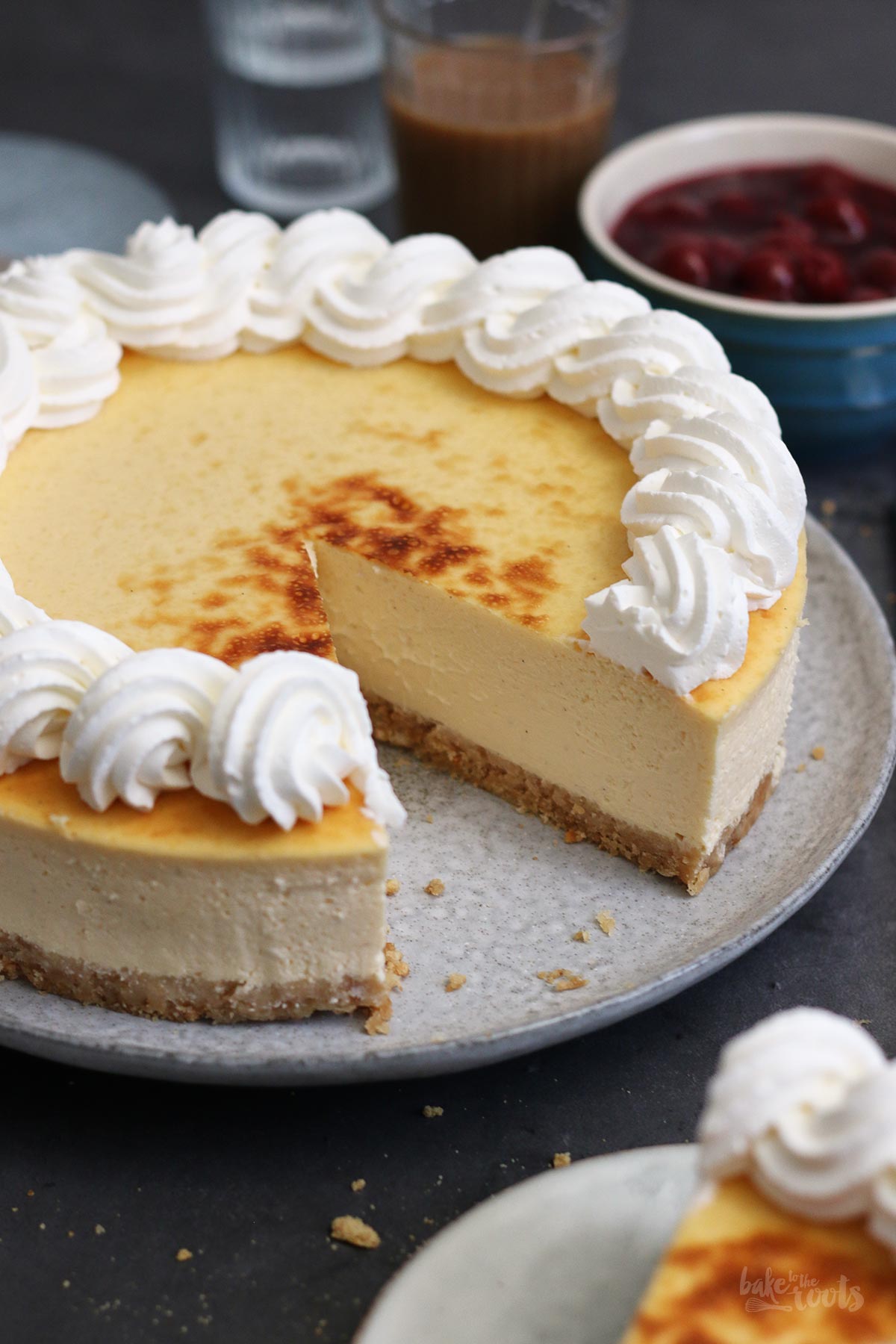
Cheesecake is (unfortunately) not a German invention. I once read, the earliest records of this type of cake date back to a Greek physicist (?!) from ancient times. At some point, recipes for that probably came to Germany with the Romans. Nevertheless, cheesecakes are some of the best-known and most popular cakes in Germany. Here, those cakes are often made with quark. In other countries, like the US, cheesecakes are mainly made with cream cheese. Some other countries use ricotta, some cottage cheese… Every country and culture has their own (delicious) recipes that are definitely worth trying.
We bake cheesecakes with or without a base. My mom’s recipe for one of the best cheesecakes ever, for example, is a delicious cheesecake baked without a base. Other recipes require a shortcrust base or maybe some yeast dough as a base. Americans like to use crushed cookies as a bottom layer for cheesecakes. Besides that, there are even more differences. Some like their cheesecake plain, some people spice up the cakes with all kinds of add-ins or toppings. Fruit, chocolate, nuts, or sprinkles – there is a lot you can do. No matter what, I think all of that almost always turns out really delicious. No matter what kind of cheesecake you are planning to make, we got some tips to make them maybe even better.
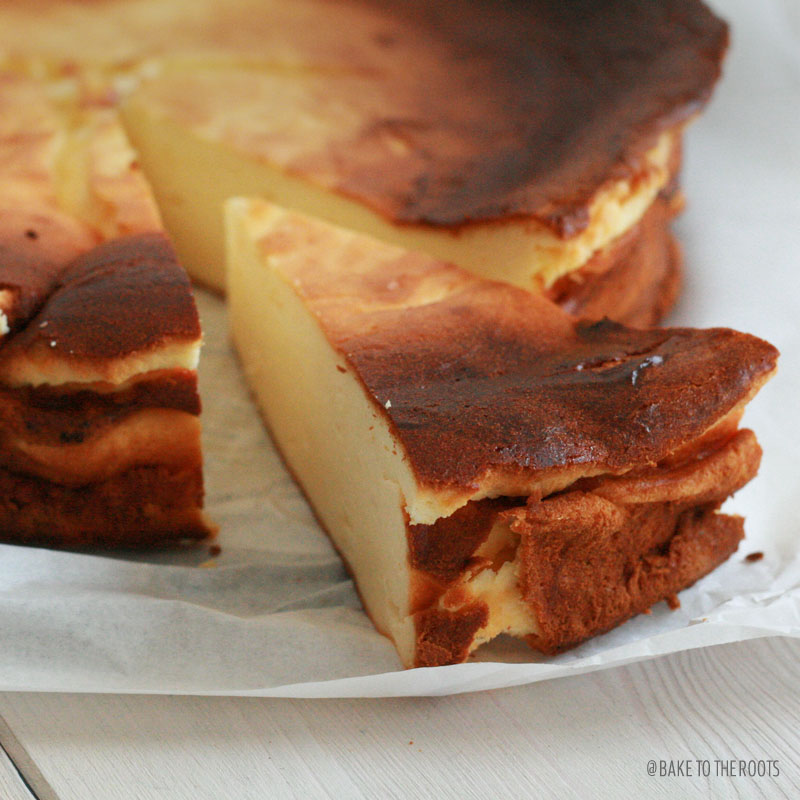
Cheesecake with or without a crust – that is the question.
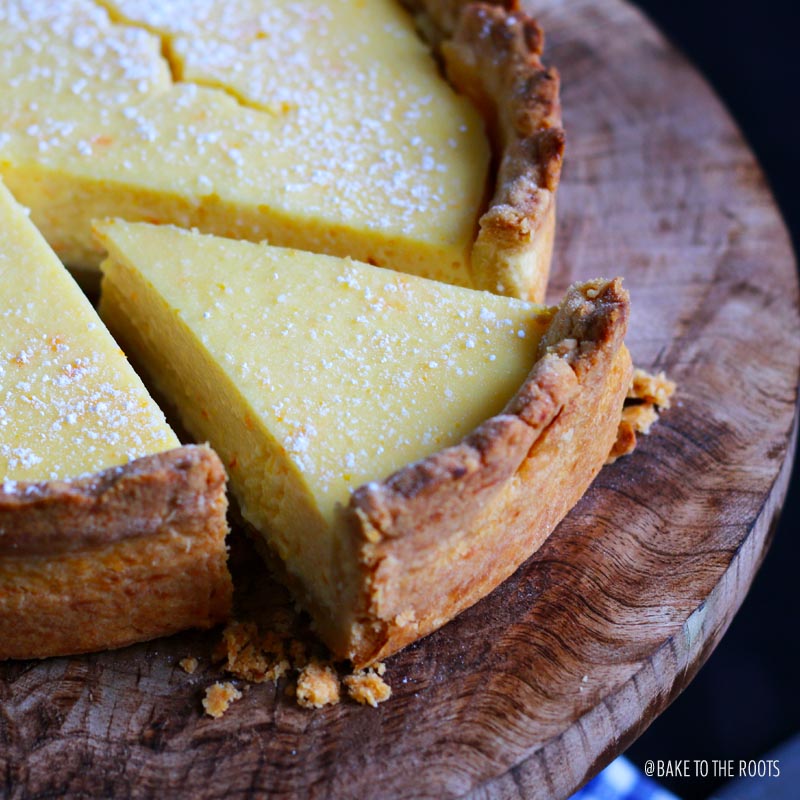
In Germany, cheesecakes with a shortcrust pastry base are very common – some bakeries prefer yeast dough as a base. American cheesecakes often have a base made with crushed cookies that are mixed with melted butter and sugar, for example. You will get a crumbly layer, but it will be rigid enough so you can cut a slice and place it on your plate. Whether a cheesecake needs a base or not depends mainly on the consistency of the filling. If the filling is firm, you can do without a base. In any case, you should use a leak-proof cake tin. If you don’t have one, you can wrap a regular baking tin tightly with aluminum foil to keep the filling where you want it to be during baking. For a cheesecake that is still a bit soft after being baked or when using fruit, we typically use a base so everything stays where it should… but maybe that’s just a preference?
Cheesecake – soft or dense filling?
How dense a cheesecake filling gets depends primarily on the ingredients, but also on how the cheesecake is prepared. For example, you can choose between quark or cream cheese as the main ingredient, right? With cream cheese you will get a denser (but creamier) cheesecake. Quark (or Topfen, as the Austrians call it) contains more liquid than cream cheese. Therefore you will get a cheesecake that is slightly softer (but also sometimes ddrier. Many recipes with quark will tell you to drain the quark properly before using it for the cheesecake filling. When drained, you can pass the quark through a sieve to make the cheesecake filling creamier. To add volume to a cheesecake you can fold in beaten egg whites – something you do when preparing Japanese Cheesecakes, for example. Quite a few options to manipulate the texture of a cheesecake. ;P
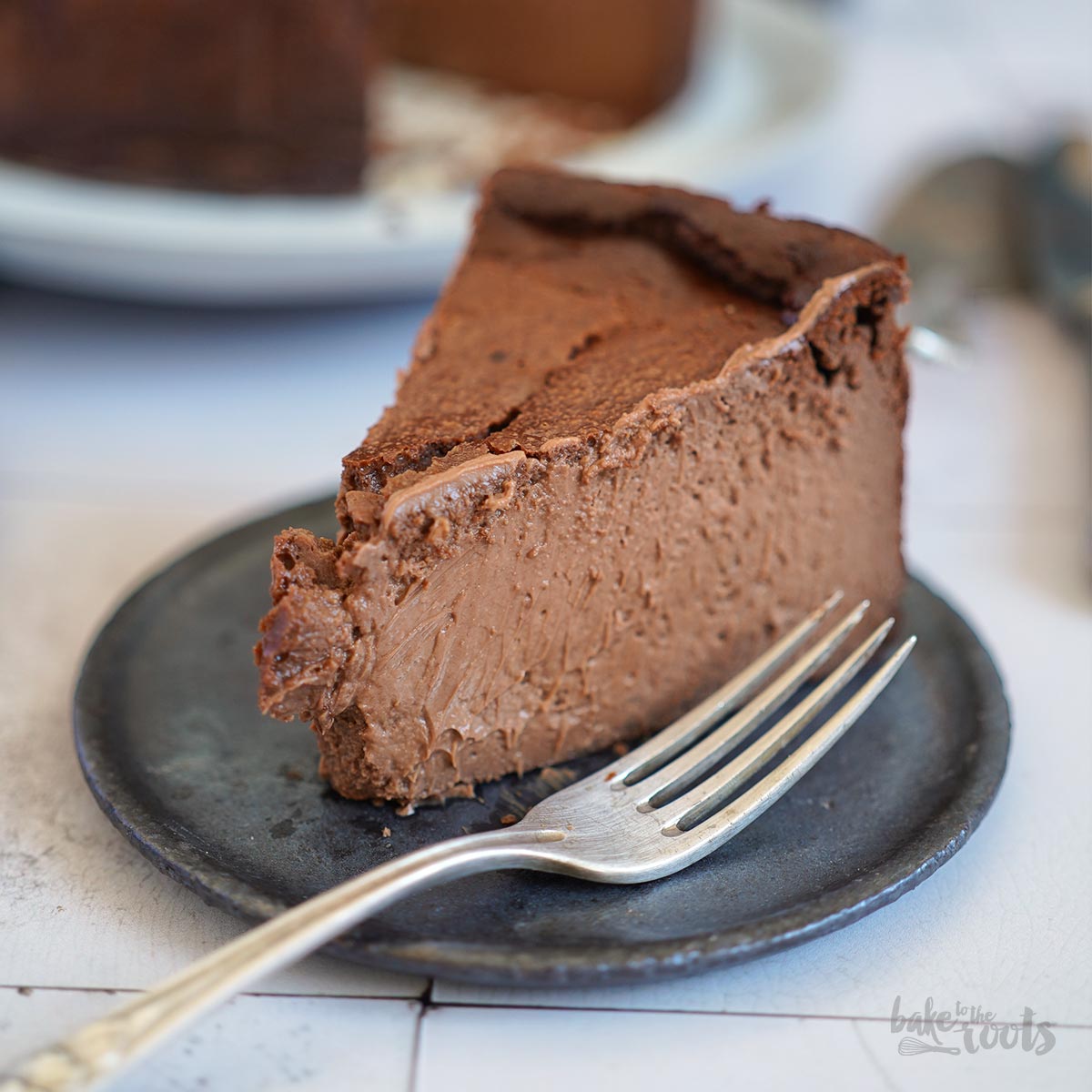
What color do you prefer?
For NY-style cheesecakes, for example, you want the top of the cheesecake to look pale, almost white. Other cheesecakes look better when slightly browned. In case you want to enhance the browning, you can brush the top of your cheesecake with a little sweetened condensed milk – about ten minutes before the end of the baking time. The sugar from the milk will caramelize and turn golden brown. You have to be careful though. Baking it too long can lead to a cheesecake that gets a bit too dark. If you do the »sweetened condensed milk trick« check regularly towards the end of the baking time and cover the cake with baking paper or aluminum foil to reduce the heat hitting the top of the cake.
How to prevent your cheesecake from collapsing.
When your beloved cheesecake rises beautifully in the oven, it’s a big disappointment when it collapses as soon as you open the oven door. What magic tricks are there to ensure that the cheesecake still looks good after cooling? Well, that’s actually quite simple (but time-consuming). Don’t bake the cheesecake in one go, but take it in several intervals and let it cool down in between. If you loosen the cheesecake from the edge of the baking tin with a knife after about 10 minutes of cooling time, it can rise further without any problems during the next baking cycle. The oven temperature should not be too hot with this method – around 150°C (fan-forced) or 170°C (top/bottom heat). Furthermore, bake the cake on the lowest rack possible.
Another tip – placing a baking pan with water at the bottom of the oven helps a cheesecake to rise as well. No matter what your recipe says about baking the cheesecake, it is often advisable to let the cake cool down slowly inside the oven with an open oven door (and also loosening the cake from the baking tin with a knife). This allows the cake to set slower and the surface cracks less or not at all.
What do I do with leftovers – if there are any?!
Almost all types of cheesecakes freeze well. It is best to put the cake in the freezer in individual slices, not everything in one piece. Whenever you are in the mood to eat the cake, you can take it out piece by piece and let it thaw – preferably in the fridge.
Craving more? Keep in touch on Facebook, Instagram and Pinterest for new post updates and more. You can also contact me with any questions or inquiries!
Links marked with an asterisk (*) are affiliate links (advertising/Werbung) to Amazon Germany. If you click on one of those links and buy something via this link, I will get a commission for that sale. The price of whatever you buy is not affected in any way by this.



Hallo Marc,
ich finde Deinen Blog wundervoll und könnte stundenlang durch die Rezepte stöbern. Daher habe ich Dich für den Liebster Award “nominiert”, auch wenn Du schon viele viele Follower hast, um Dir mitzuteilen, dass ich Deinen Blog eben toll finde. Gerne kannst Du beim Award mitmachen und die Fragen beantworten, ich bin aber nicht böse, wenn Du nicht mitmachst!
Viele Grüße
FortuneCookie
https://fortunecookery.wordpress.com/2015/03/16/nominierung-fur-den-liebster-award/
Hallo FortuneCookie ;)
Erstmal danke für die netten Worte und Komplimente zu meinem Blog!
Zum “Liebster Award” muss ich leider passen – wie Du dir vielleicht schon denken kannst, bin auch ich mit meinem Blog schon öfter nominiert worden und hab entsprechend auch schon mitgemacht – aber ich finds ne Tolle Sache und die Fragen/Antworten immer wieder interessant! Man erfährt dann mal so ein bisschen was über die Personen hinter den Blogs :)
LG Marc
Lieber Marc,
was für eine schöne Seite! Und ich lieeeebe Käsekuchen. Sieht super appetitlich aus :-)
Herzliche Grüße
Malene
Hallo Marc,
mir war gar nicht bewusst, dass man Käsekuchen einfrieren kann! Danke für die Tipps und natürlich deinen tollen Blog! Ich werde sicher öfter vorbeischauen und Sachen ausprobieren.
Grüße,
Jenny
Hallo Jenny,
viele Kuchen lassen sich gut einfrieren – man muss nur darauf achten, dass sie gut eingepackt sind, dann halten sie auch ein Weilchen :)
LG, Marc
Hallo, vielen Dank für den wunderbaren Blog. ich war auf der Suche nach einer Alternative zum herkömmlichen Plunderteig, der mir mit vielzuviel Butter daherkommt. Ich werde mal der im Internet vorgeschlagenen Alternative, dem Quarkölteig, folgen. Nun noch zum Käsekuchen, den wir auch sehr lieben. Aber nur mit Rührteig. Mürbteig ist auch mit zuviel Butter und uns zu fest. Aber alles ist nun mal Geschmackssache.