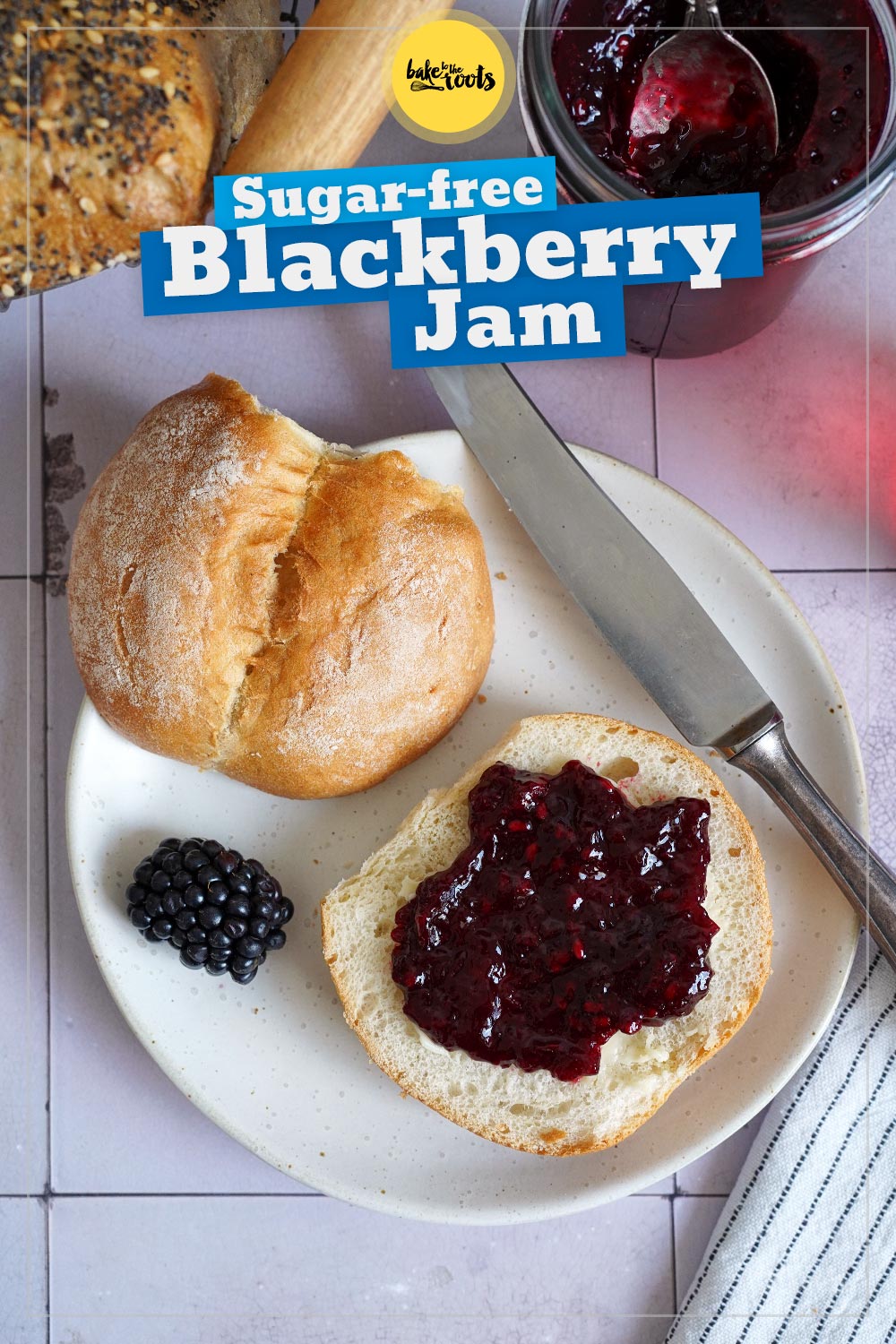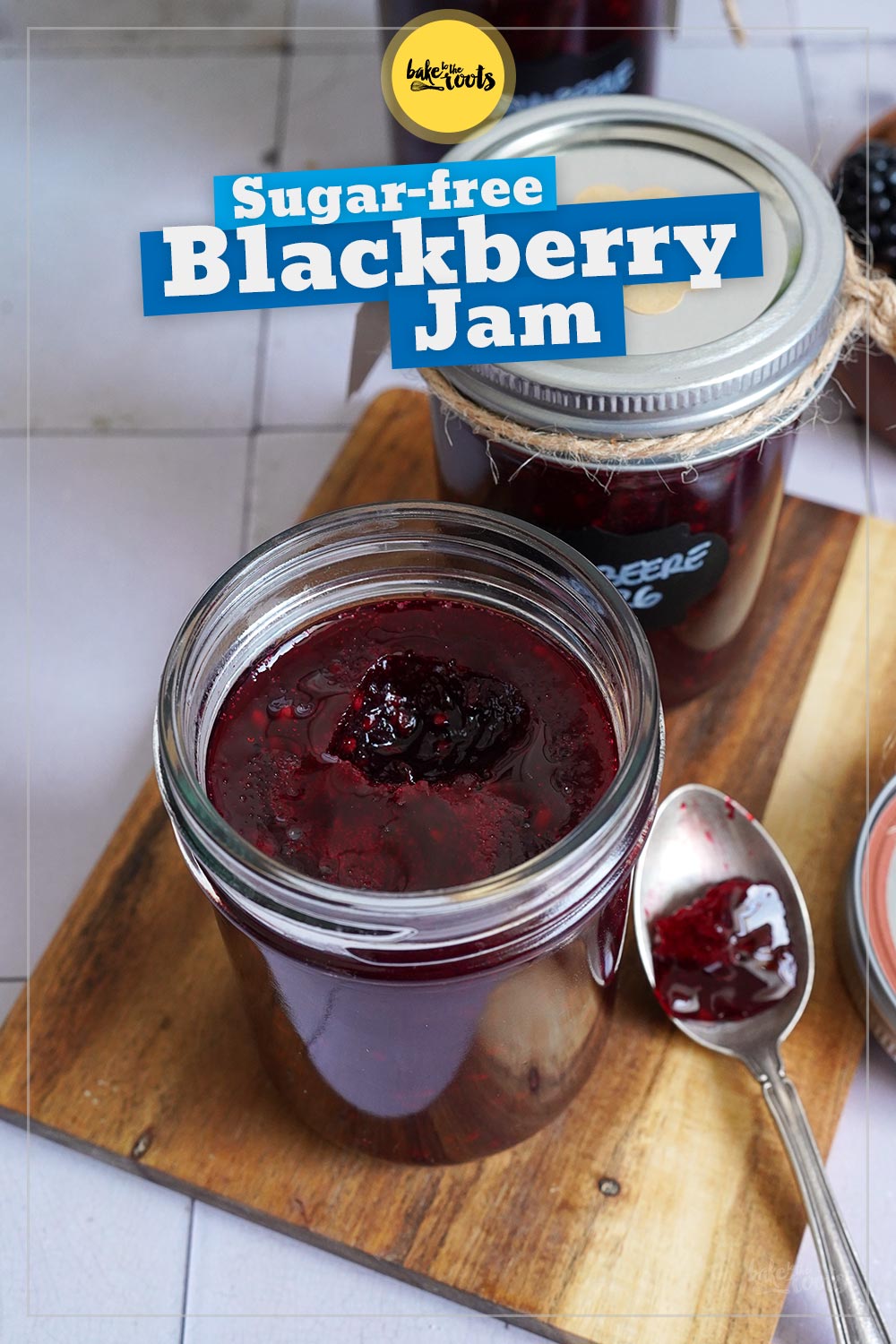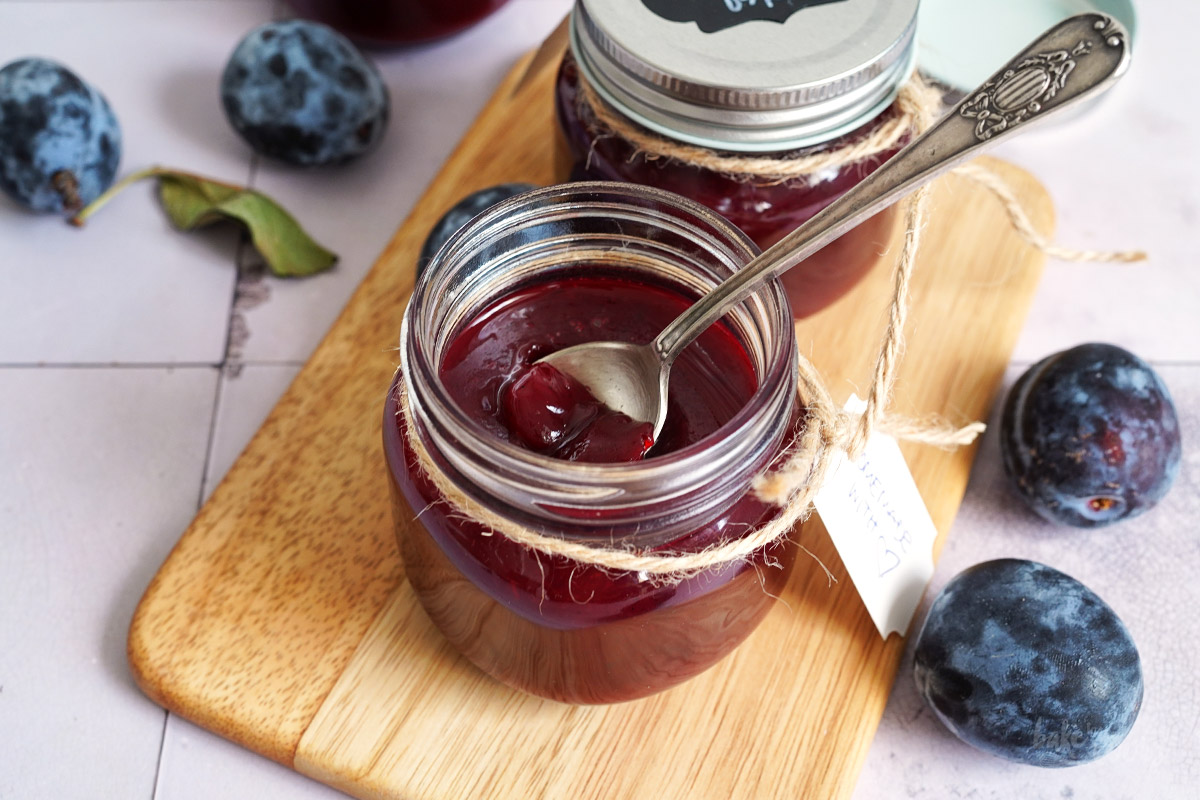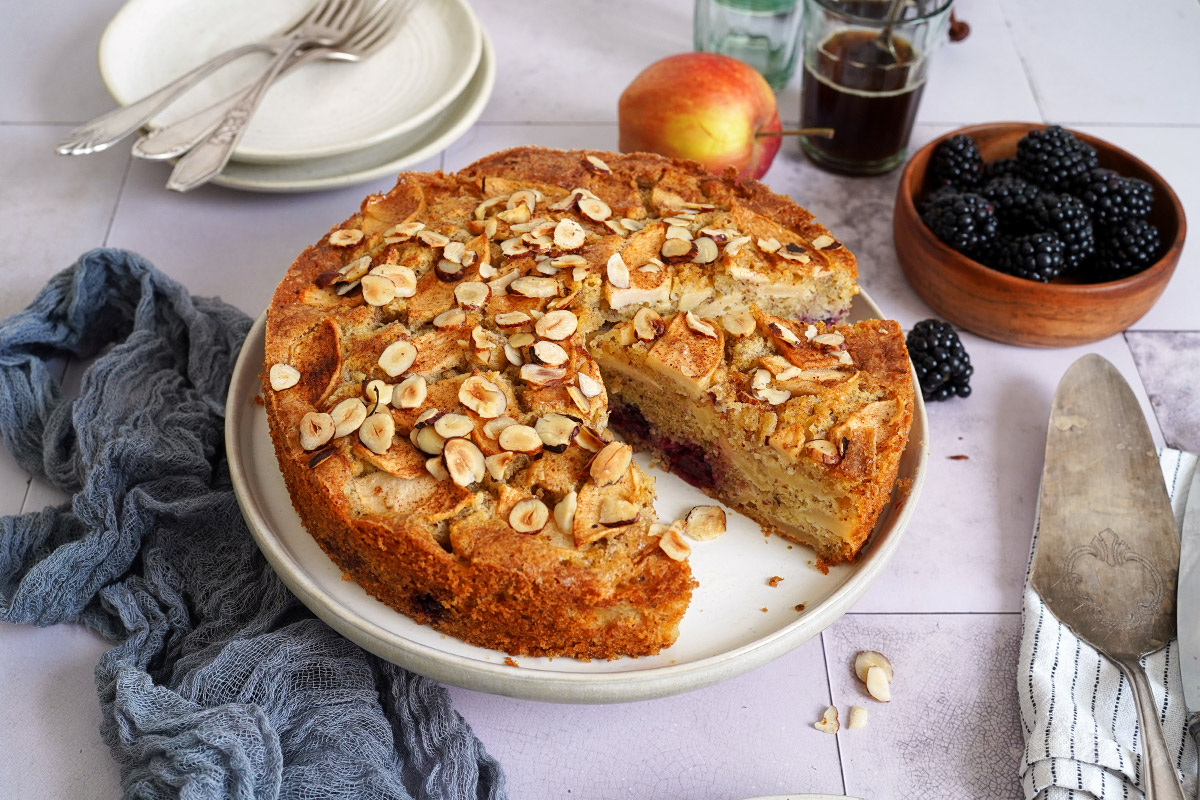


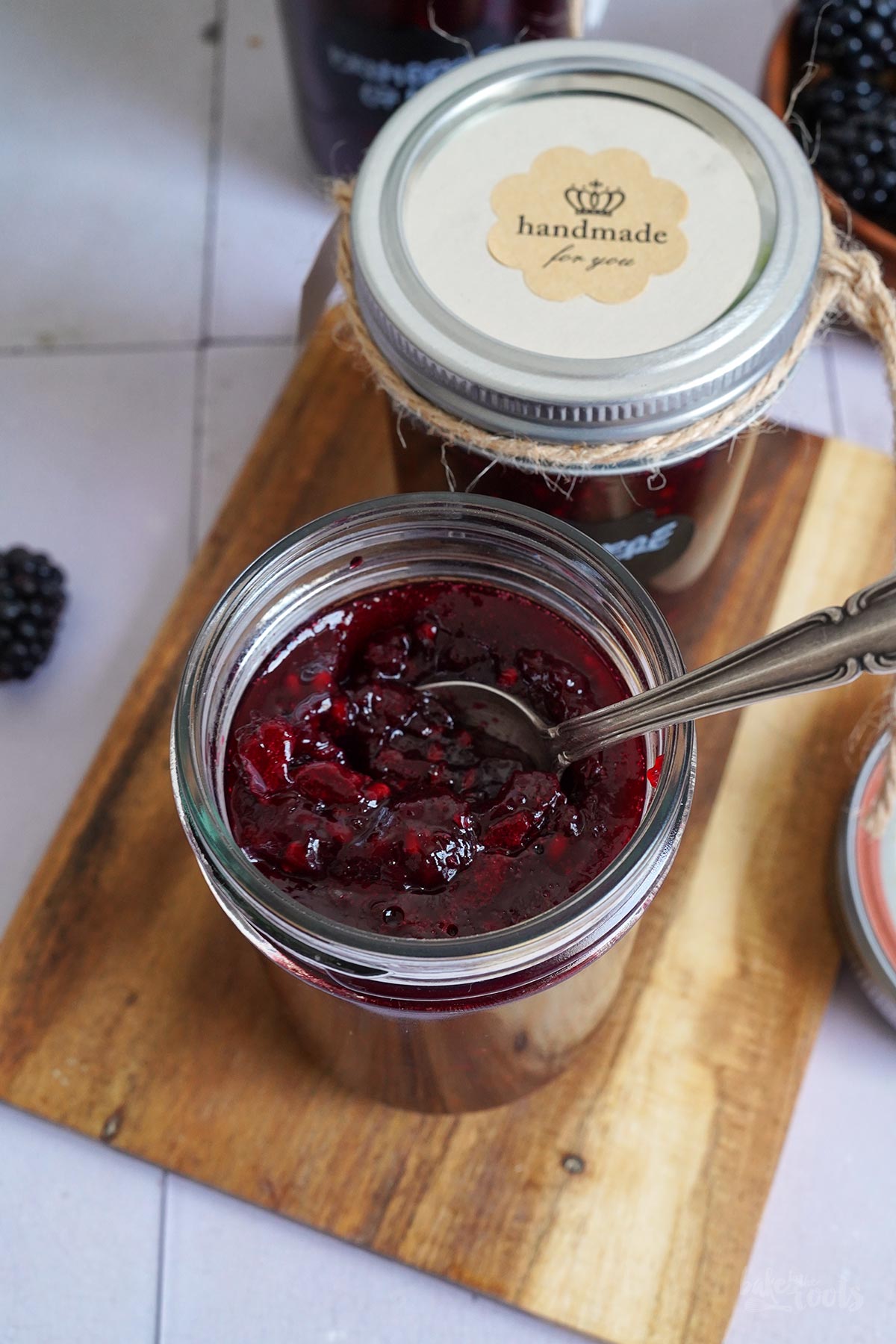
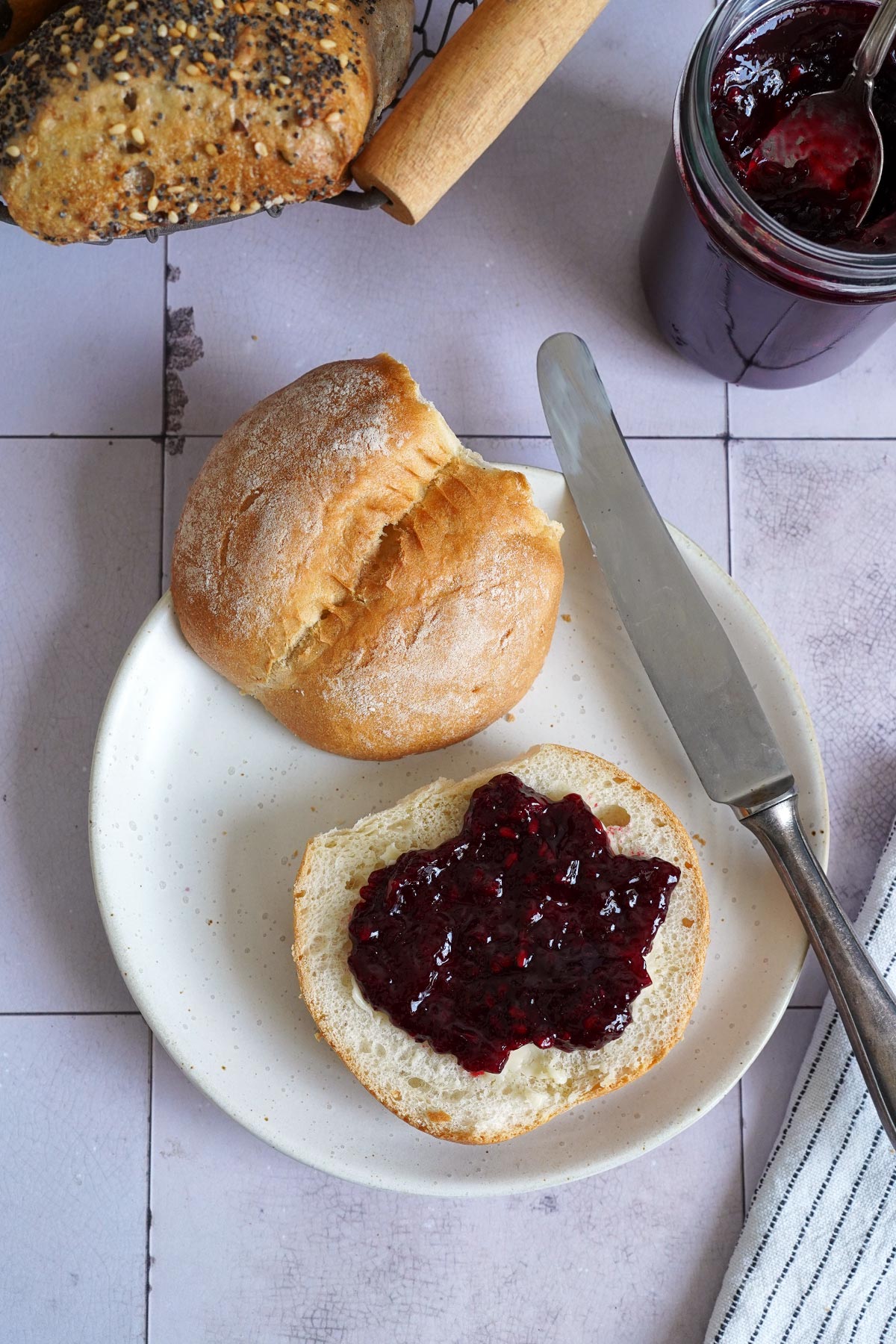
For many people, jam is part of their breakfast morning routine. If you like it sweet but want to cut back on sugar, opting for sugar-free or reduced-sugar jam is an easy way to do so. Speaking of that – this Blackberry Jam is perfect for anyone who needs or wants to watch their sugar intake. I am talking of diabetics, for instance, myself included.
There are quite a few reduced-sugar jams and fruit spreads available in supermarkets here in Germany. The selection isn’t huge, but the situation is certainly better than it was a few years ago, when such products were basically non-existent. Things look quite different abroad – Spain comes to mind immediately. There you’ll find a much wider range of sugar-free and reduced-sugar products.
Of course, the amount of sugar saved in a single teaspoon of jam on a bread roll or croissant isn’t massive. But as the saying goes, »every little bit helps«. In other words, even if a jam-topped bread roll doesn’t offer huge sugar-saving potential on its own, it all adds up over time. Personally, I prefer savory toppings, but if I do reach for some jam, I definitely prefer a sugar-free or reduced-sugar version.
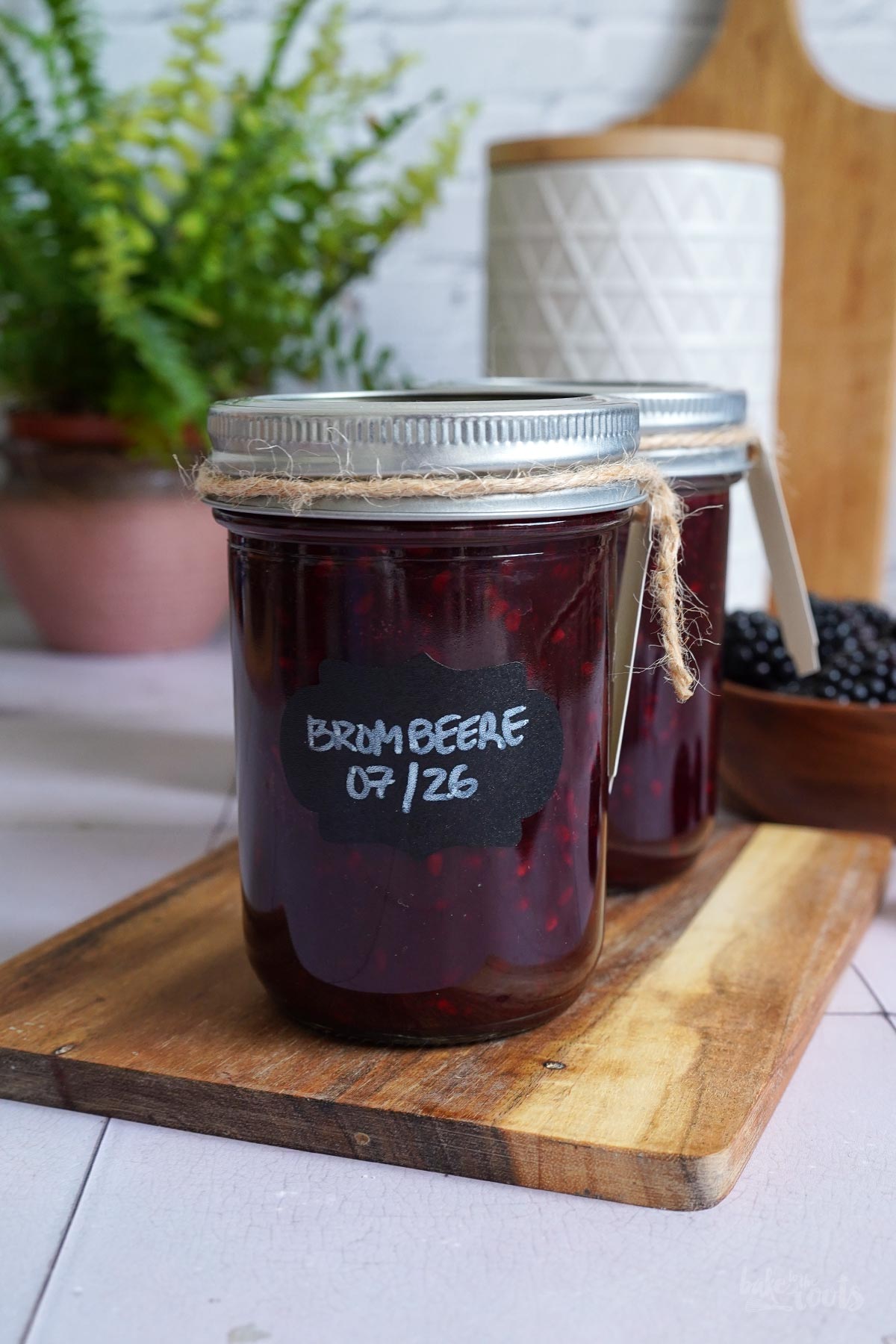
Speaking of sugar-free versus reduced-sugar… These terms mean very different things. If a product is labeled »sugar-free«, it cannot contain more than 0.5% of sugar. At least here in Europe, I think. A »reduced-sugar« label, however, doesn’t specify the actual sugar content – it simply means this version contains less sugar than the previous version or less than a comparable product.
Technically speaking, this jam isn’t 100% sugar-free. The blackberries used contain natural sugars and that you can’t remove during the cooking process. We aren’t quite at that stage yet. However, no sugar has been added during preparation. So, the technically correct term would be blackberry jam without added sugar. But given the very low sugar content, I decided to label it as »sugar-free«.
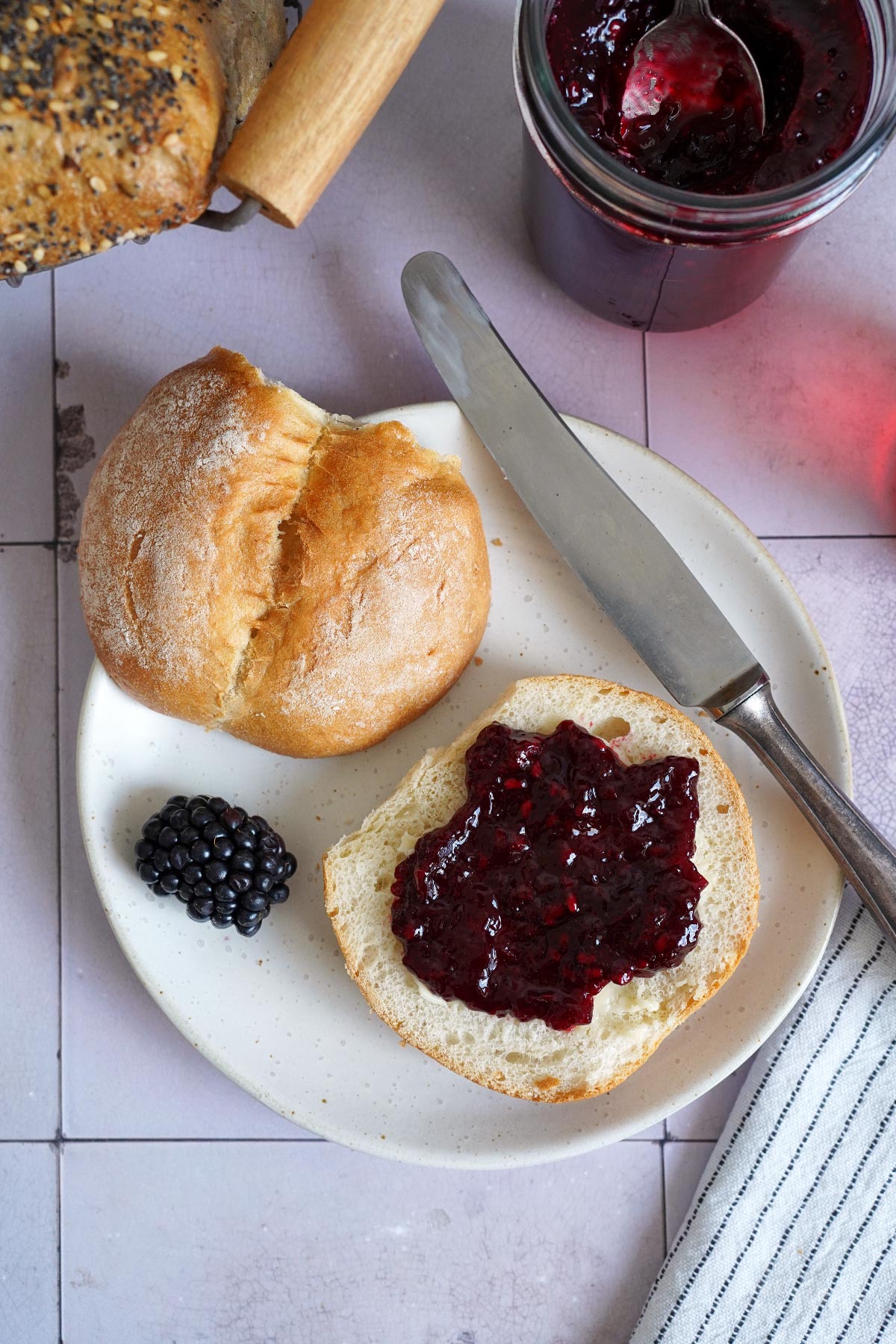
In the roughly 1.5 kg of jam you make, there is only around 50g of sugar. Based on standard nutritional numbers for blackberries, plus about 15g of dextrose from the gelling agent. That works out to just 10g of sugar per glass jar, or roughly 4% of sugar all in all. Mathematically speaking, that exceeds the 0.5% limit allowed for a »sugar-free« label. However, it is still significantly less than in conventionally prepared jam, which can contain up to 55% sugar, depending on the gelling agent used.
Instead of sugar or preserving sugar, I use xylitol and a gelling powder to make the jam. Of course, this isn’t without controversy either. While too much sugar can cause problems, excessive xylitol intake isn’t good for the body, either. That said, the amount you spread on one or two bread rolls in the morning is perfectly safe.

Of course, you can also make jam or fruit spread without xylitol or gelling powder. Alternatives include apple pectin, chia seeds, or agar-agar. These ingredients are used to thicken fruit purée or juices, but the resulting product has a much shorter shelf life compared to jam made with sugar. This quick type of jam usually lasts a maximum of two weeks in the fridge. Jam made with Xyit doesn’t have quite the same shelf life as jam made with sugar either, but if prepared hygienically, it will still keep for at least 1–2 years when unopened.
Interested in more recipes? Our Strawberry & Vanilla Jam is also made without added sugar and tastes delicious! Alternatively, I can recommend our Homemade Rhubarb Curd, which is also prepared without added sugar.
INGREDIENTS / ZUTATEN
(6 glass jars, 240ml each)
35 oz. (1 kg) fresh blackberries
17.6 oz. (500g) xylitol*
1 sachet (25g) gelling powder (Gelierfix 2:1)*
1 tsp. vanilla powder*
2 tsp. lemon juice
(6 Gläser à 240ml)
1 kg frische Brombeeren
500g Xylit*
1 Beutel (25g) Gelierfix (2:1)*
1 TL Vanillepulver*
2 TL Zitronensaft
Tips & tricks for making jam
Cleanliness is paramount when making jam.
When preserving, you should sterilize the glass jars and lids and take care during filling the jars to ensure no jam touches the rim and everything stays clean. It is best to use a funnel and wipe the rims with a clean, damp cloth before putting the lid on.
Xylitol vs. sugar used in Jam.
Xylitol behaves slightly differently than regular sugar when heated. For instance, it doesn’t caramelize in the same way and has a slightly cooling aftertaste, though this is barely noticeable in jam. Important: Xylitol is highly toxic to dogs. If you have pets, be extra careful to ensure your four-legged friends don’t accidentally get some of the jam.
Pay close attention to which gelling agent you buy.
»Gelierfix 2:1« is specifically designed for jams made with less sugar or sugar substitutes. There are other versions of gelling agents available (here in Germany) for different fruit-to-sugar/substitute ratios. Check the packaging carefully when buying – don’t just use any random product.
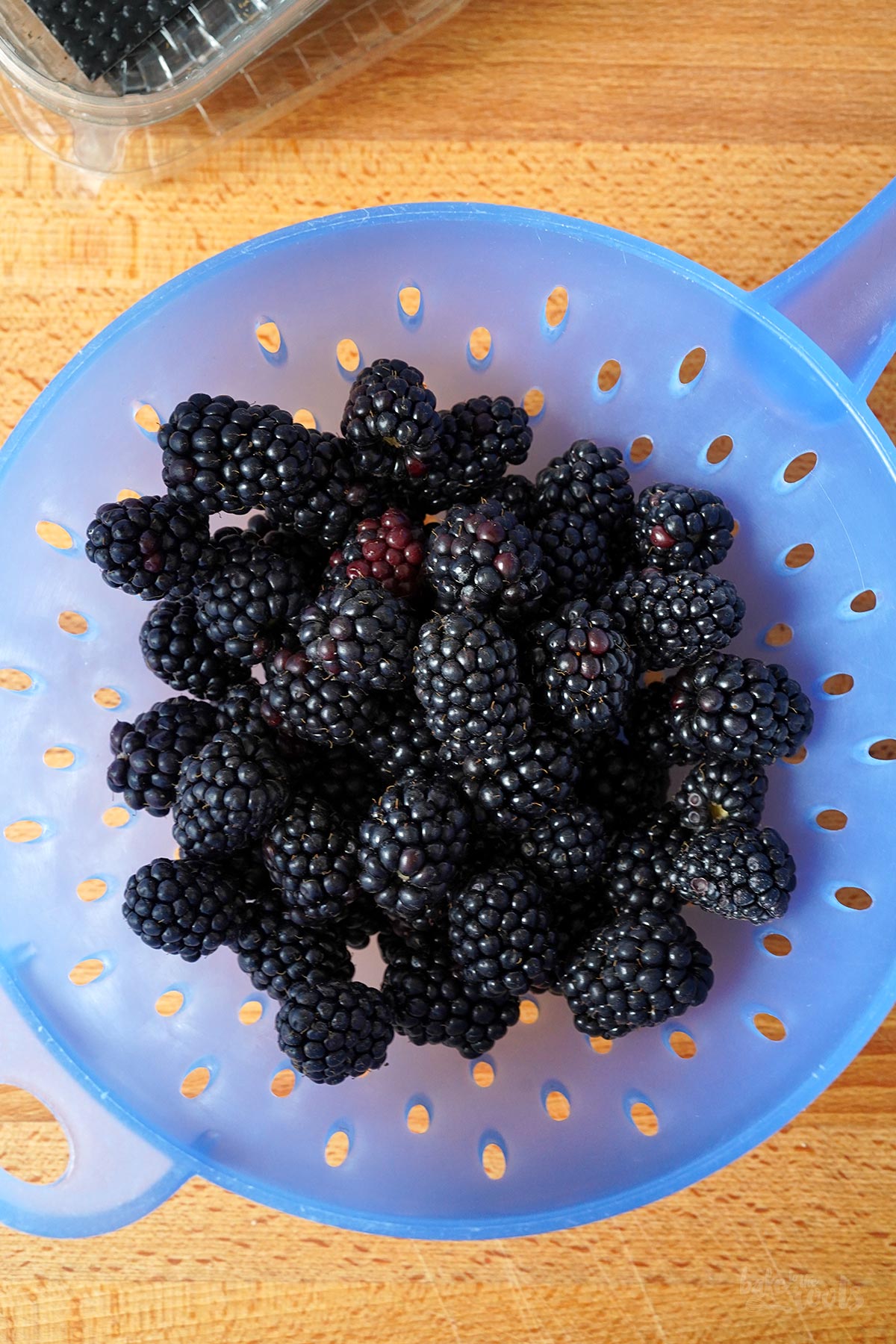
Blackberries – ripe is great, but not overripe.
Use dark, plump berries whenever possible. Overripe, soft berries contain too much water, making it harder for the jam to set. Frozen blackberries work as well, but they should be thoroughly thawed and drained first.
Vanilla powder vs. a vanilla bean pod.
If you have a scraped-out vanilla bean pod on hand, you can certainly use it and perhaps even place it inside the glass jars for visual appeal. However, in terms of flavor, vanilla powder is easier to work with and distributes evenly.
Sugar-free jam generally has a slightly shorter shelf life.
The shelf life of 1–2 years mentioned in the recipe applies only if you work under absolutely hygienic conditions. While xylitol does inhibit bacterial growth, it does not have quite the same preservative effect as sugar. When in doubt, it is best to use it up sooner and regularly check the jars for signs of mold or fermentation.
DIRECTIONS / ZUBEREITUNG
1. First sterilize the glass jars* and lids – either by boiling them in plenty of water or heating them in the oven. Be careful with the lids, they might not withstand the same heat as the glass jars. Set aside and let dry.
2. Wash the blackberries and let them drain properly.
3. Mix the xylitol, gelling powder (Gelierfix), and vanilla powder in a tall saucepan. Add the blackberries and lemon juice, then purée everything using an immersion blender*. If you want some larger pieces, purée only briefly.
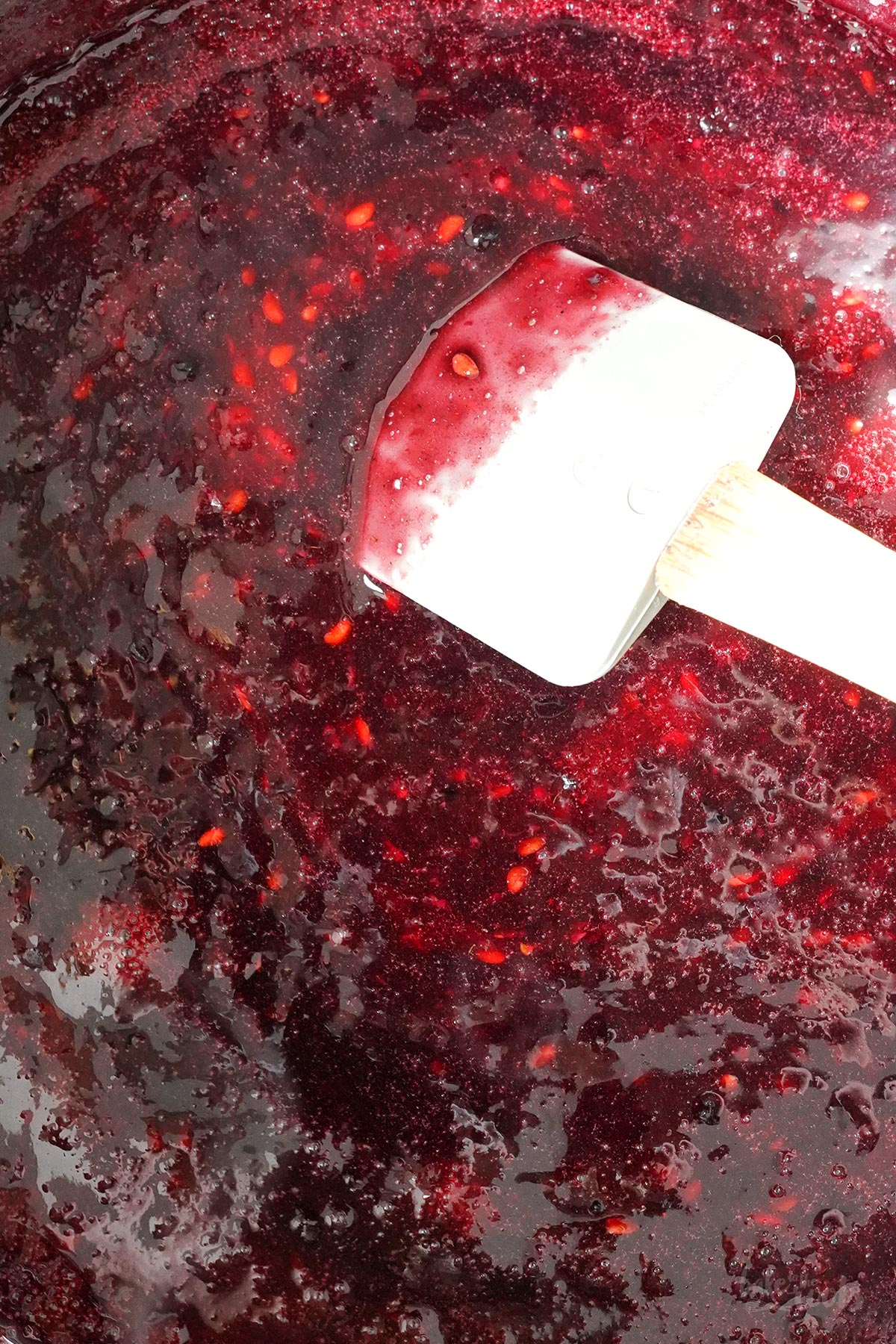
4. Bring the mixture to a boil, then let it boil vigorously for about 4–5 minutes while stirring constantly. Do a gelling test (using a small plate) – if the jam sets quickly, it is ready to be canned. If not, simply cook it a little longer.
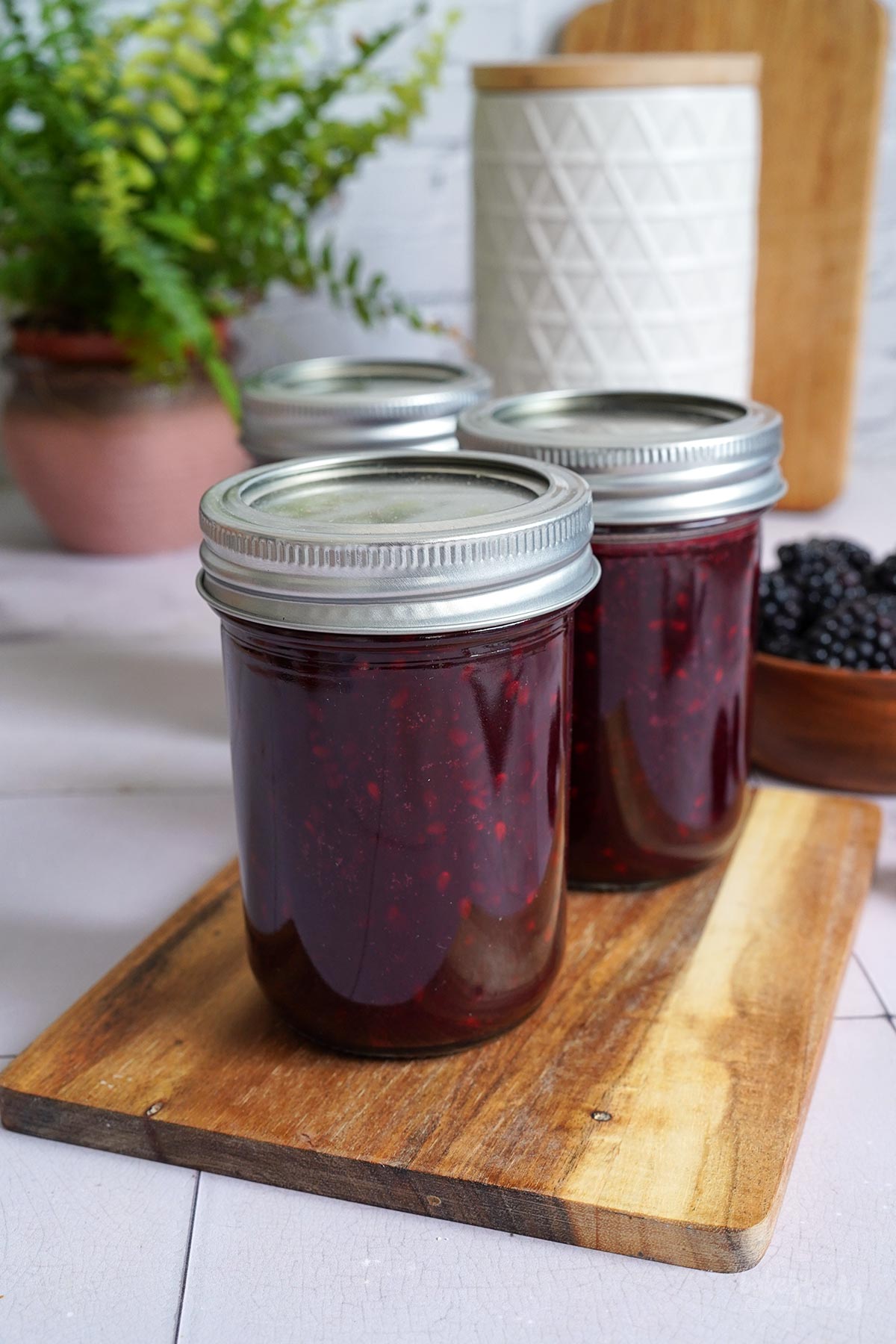
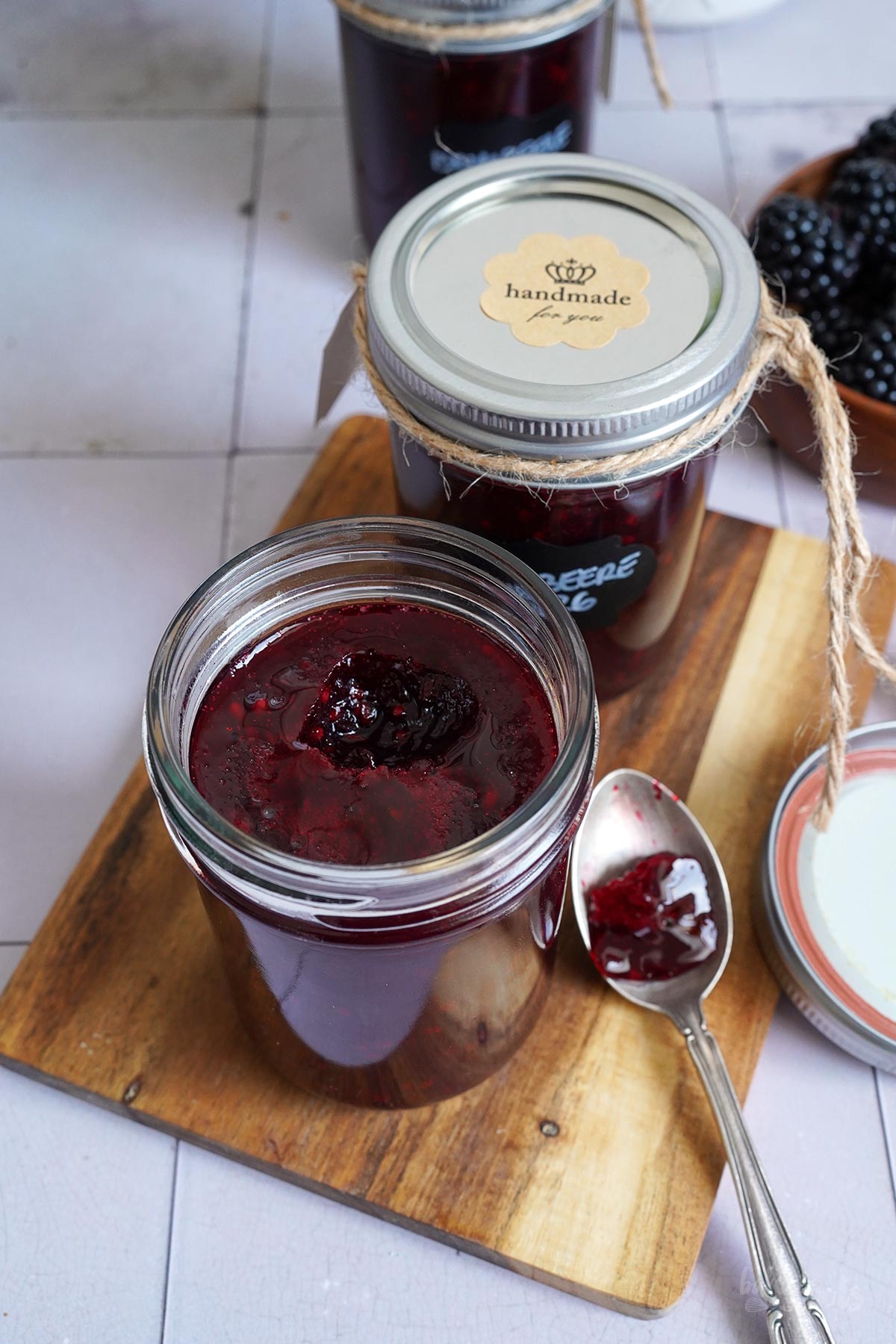
5. Pour the jam into the prepared glass jars and seal them tightly immediately. There is no need to turn the jars upside down. Let them cool completely. Store the jars in a cool, dark place (e.g. basement). If you worked with clean equipment, the unopened jam should keep for 1–2 years. Once opened, store in the fridge and consume within 2–6 weeks.
1. Die Einmachgläser* und Deckel sterilisieren – entweder in genügend Wasser auskochen oder im Backofen erhitzen. Vorsicht bei den Deckeln – die halten nicht automatisch so viel Hitze aus, wie die Gläser. Zur Seite stellen und trocknen lassen.
2. Die Brombeeren waschen und gut abtropfen lassen.
3. Xylit, Gelierfix und Vanillepulver in einem hohen Topf vermischen, die Brombeeren und den Zitronensaft dazugeben und dann alles kurz mit einem Pürierstab* pürieren. Wer ein paar Stücke in der Marmelade möchte, sollte hier weniger pürieren.
4. Die Mischung aufkochen lassen, dann unter ständigem Rühren etwa 4-5 Minuten sprudelnd kochen lassen. Den Geliertest machen (mit einem kleinen Teller) – wird die Marmelade zügig fest, kann abgefüllt werden. Wenn nicht, einfach noch etwas länger kochen lassen.
5. Die Marmelade in die vorbereiteten Gläser füllen und sofort gut verschließen. Auf den Kopf stellen ist nicht notwendig. Alles komplett abkühlen lassen. Die Marmeladengläser an einem dunklen, kühlen Ort (z.B. Keller) lagern. Wenn sauber gearbeitet wurde, sollte die Marmelade ungeöffnet 1-2 Jahre durchhalten. Nach dem Öffnen im Kühlschrank lagern und innerhalb von 2-6 Wochen aufbrauchen.
Craving more? Keep in touch on Facebook, Instagram and Pinterest for new post updates and more. You can also contact me with any questions or inquiries!
Here is a version of the recipe you can print easily.
Print
Sugar-Free Blackberry Jam
- Prep Time: 00:20
- Cook Time: 00:05
- Total Time: 04:00
- Yield: 6 1x
- Category: Homemade Stuff
- Method: -
- Cuisine: Germany
- Diet: Diabetic
Description
Making homemade jam without sugar is super easy – this sugar-free blackberry marmalade is a family favorite and great for everyone who wants to cut back on sugar!
Ingredients
35 oz. (1 kg) fresh blackberries
17.6 oz. (500g) xylitol*
1 sachet (25g) gelling powder (Gelierfix 2:1)*
1 tsp. vanilla powder*
2 tsp. lemon juice
Instructions
1. First sterilize the glass jars* and lids – either by boiling them in plenty of water or heating them in the oven. Be careful with the lids, they might not withstand the same heat as the glass jars. Set aside and let dry.
2. Wash the blackberries and let them drain properly.
3. Mix the xylitol, gelling powder (Gelierfix), and vanilla powder in a tall saucepan. Add the blackberries and lemon juice, then purée everything using an immersion blender*. If you want some larger pieces, purée only briefly.
4. Bring the mixture to a boil, then let it boil vigorously for about 4–5 minutes while stirring constantly. Do a gelling test (using a small plate) – if the jam sets quickly, it is ready to be canned. If not, simply cook it a little longer.
5. Pour the jam into the prepared glass jars and seal them tightly immediately. There is no need to turn the jars upside down. Let them cool completely. Store the jars in a cool, dark place (e.g. basement). If you worked with clean equipment, the unopened jam should keep for 1–2 years. Once opened, store in the fridge and consume within 2–6 weeks.
Notes
Make something amazing in the kitchen!
Links marked with an asterisk (*) are affiliate links (advertising/Werbung) to Amazon Germany. If you click on one of those links and buy something via this link, I will get a commission for that sale. The price of whatever you buy is not affected in any way by this.