

Anyone who has a garden and grows veggies there will surely want to make the most of whatever the garden gives you. If you don’t have too many plants, that probably won’t be an issue. But if your garden is on the larger side, you might want to consider ways to preserve your harvest. Pickling veggies is a fantastic method – like these simple Pickled Gherkins. It’s incredibly easy to do. The only downside? You have to wait a few weeks before you can taste the results.
Unfortunately, we don’t have a garden (anymore). We have a small rooftop terrace, a small raised bed, and various flowerpots containing some fruit and veggie plants. Sadly, the yield isn’t nearly enough for canning or pickling. We have to buy the veggies we want to preserve at the farmers’ market or the supermarket. While that’s not quite as satisfying as using your own homegrown produce, it does have its perks. Namely, skipping the hard work of cultivation. All that watering and tending over the course of months can get a bit tedious…
But honestly? If we had the chance to get a garden somewhere, we’d probably be there within five minutes to start planting immediately. Despite all the work involved, there’s something genuinely fun about growing plants and then harvesting and processing whatever you can get. Unfortunately, Berlin isn’t the ideal place for that. There’s virtually nothing available in our neighborhood. A little more outside the city center you have to wait ten years or even longer to get a small garden (Schrebergarten).
Well. As already mentioned, you can certainly pickle, can, and preserve store-bought fruit and veggies, too. I usually decide quite spontaneously when I want to preserve something. It all depends on what’s currently on offer at the supermarket or the farmers’ market. Naturally, you don’t want to pickle something that ends up costing twice as much as the store-bought version. That would be a bit silly.
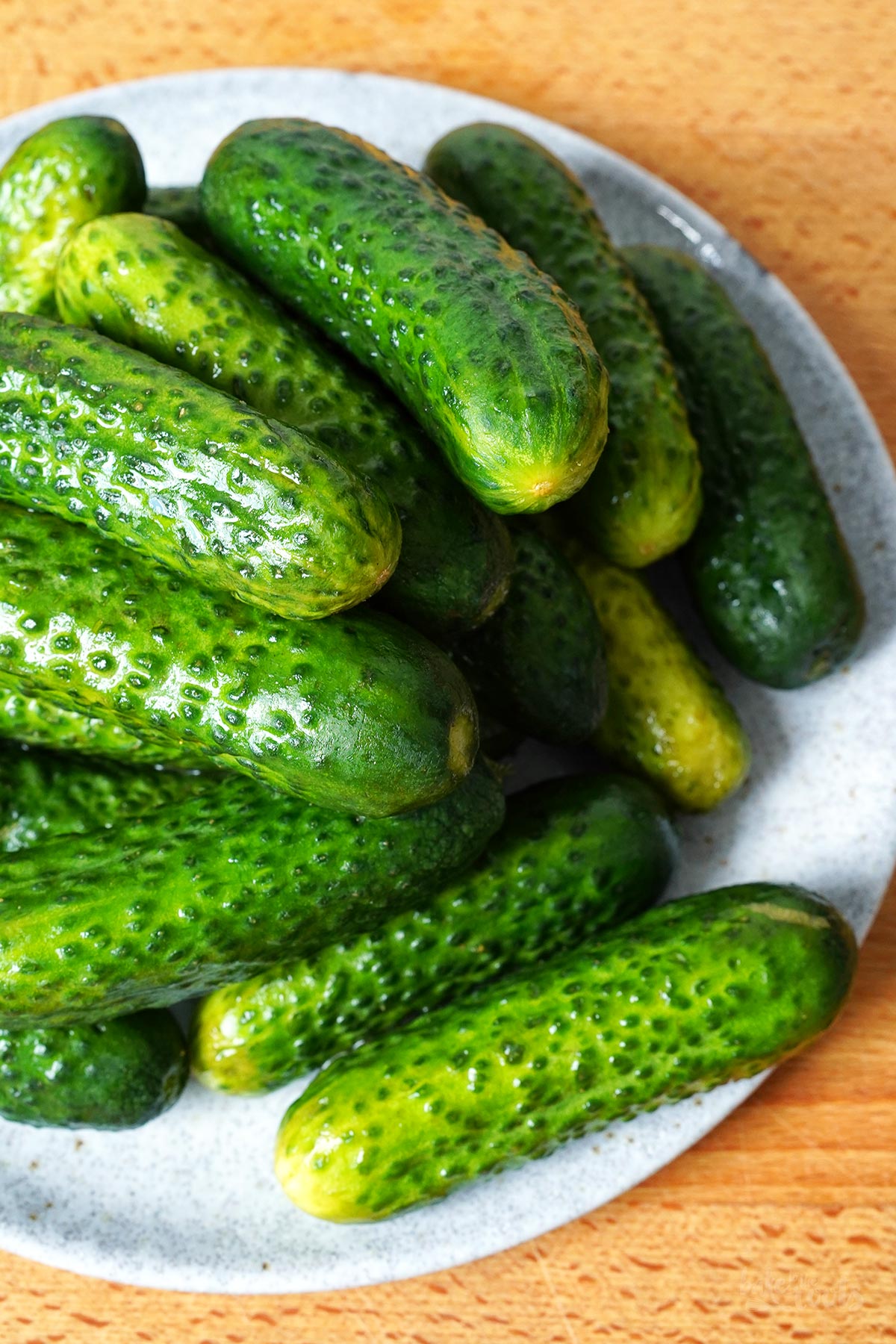
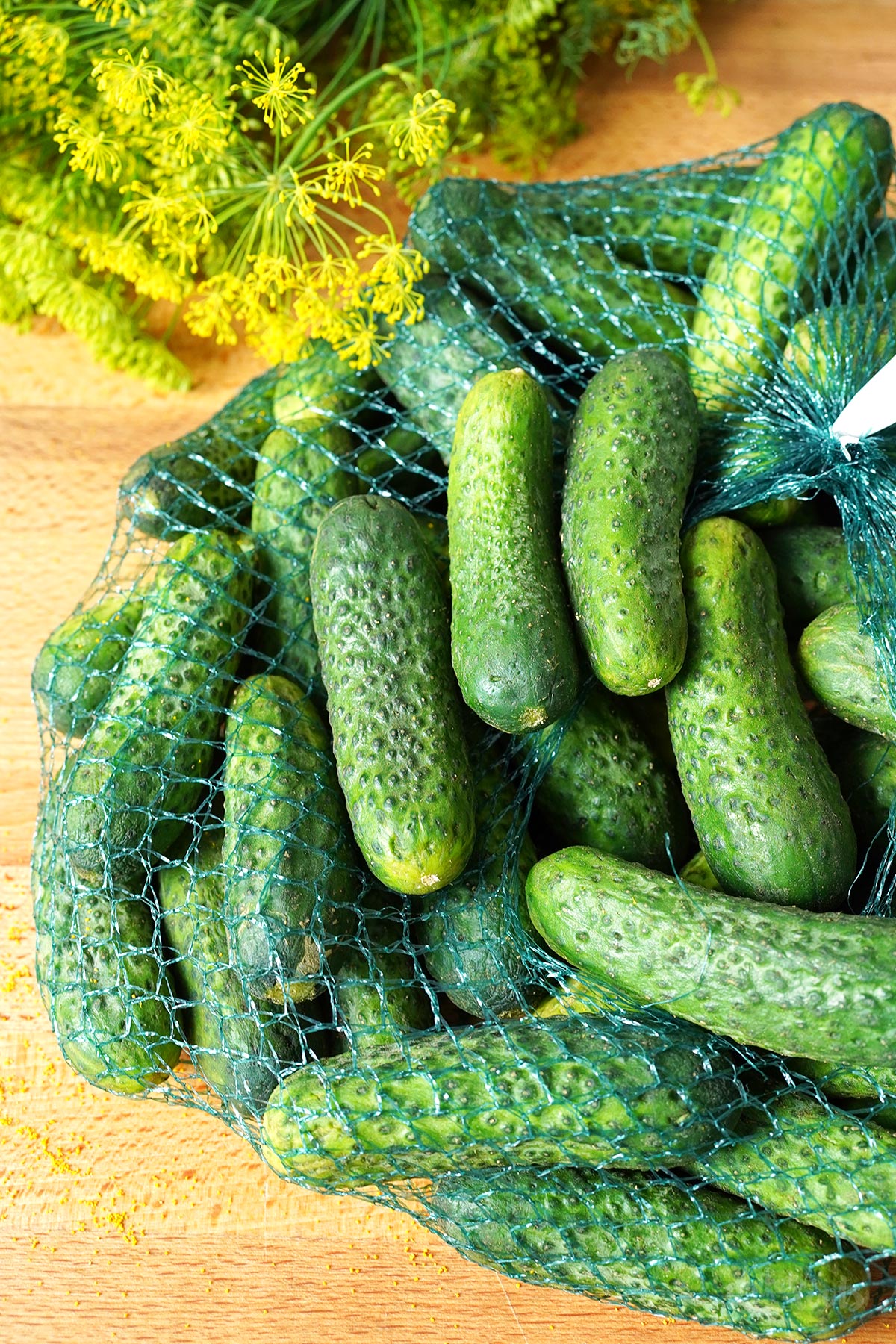
The cucumbers for this recipe were a real bargain. I paid less than 3 euros for about 2.5 kilos of mini cucumbers. Even when you factor in the other ingredients (I’m leaving the canning jars out of the calculation since we’ve had them sitting around for a while), it’s still significantly cheaper than the pickles you find in the supermarket. Affordable veggies to pickle, plus the ability to decide exactly how they should taste – that’s definitely a win!
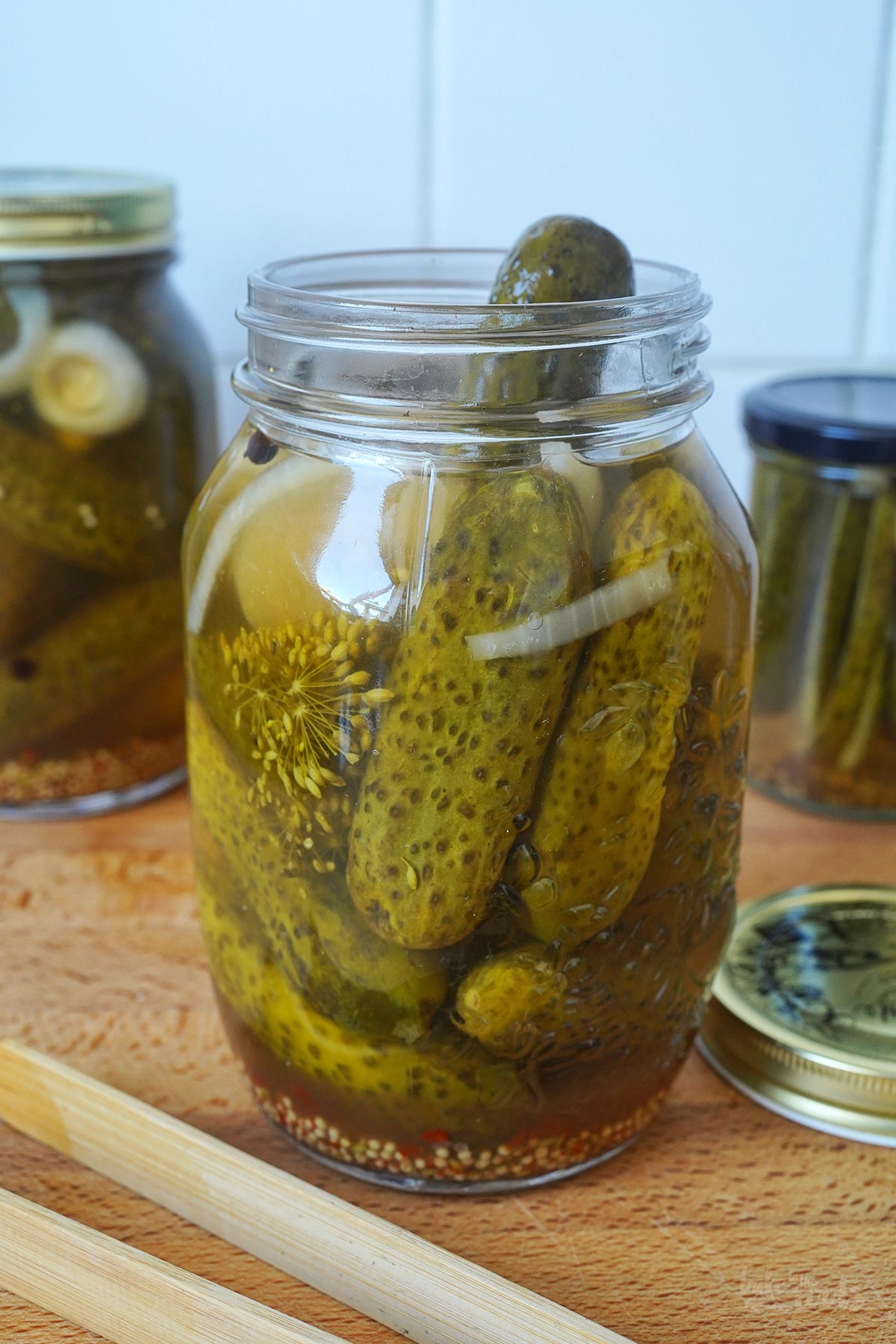
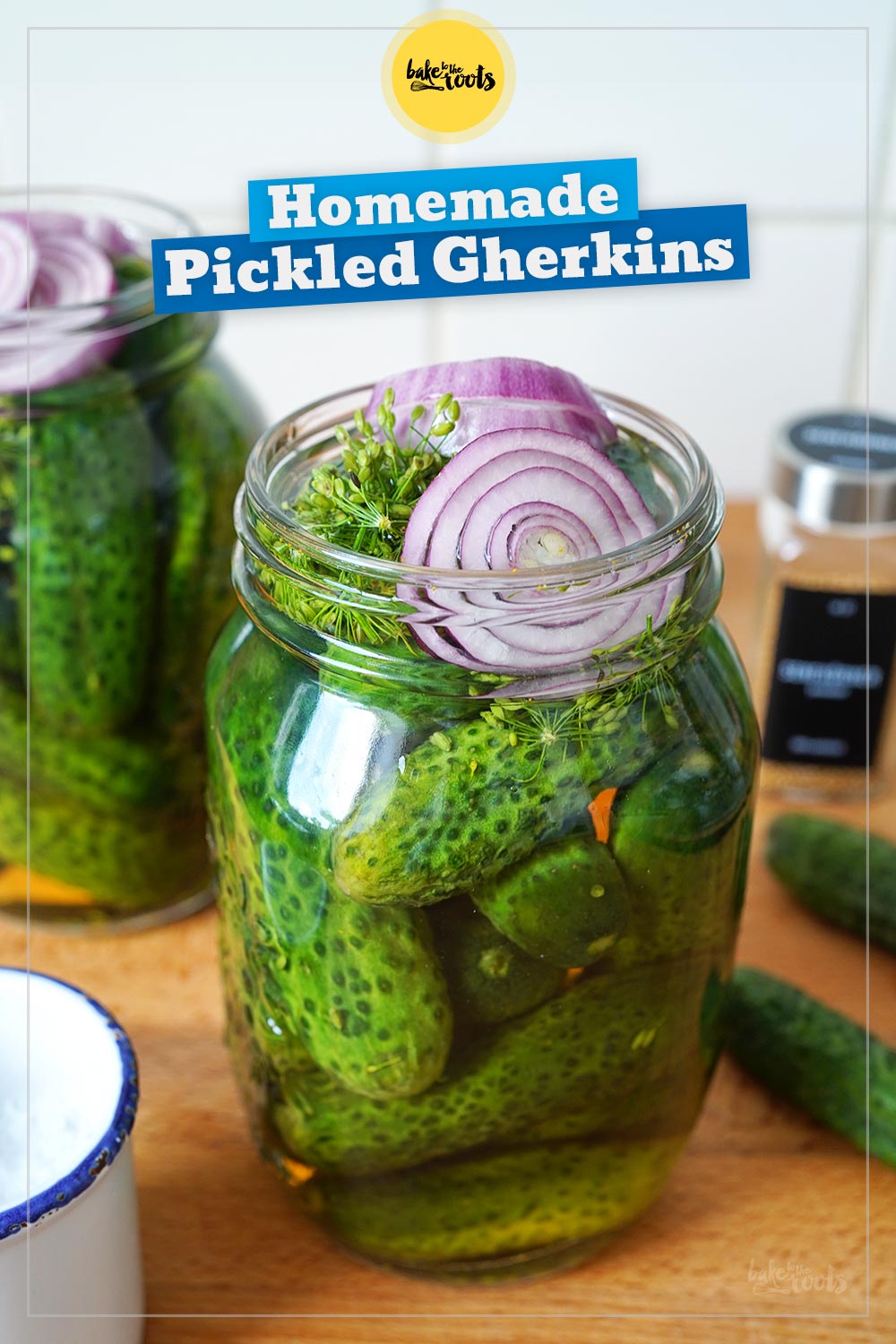
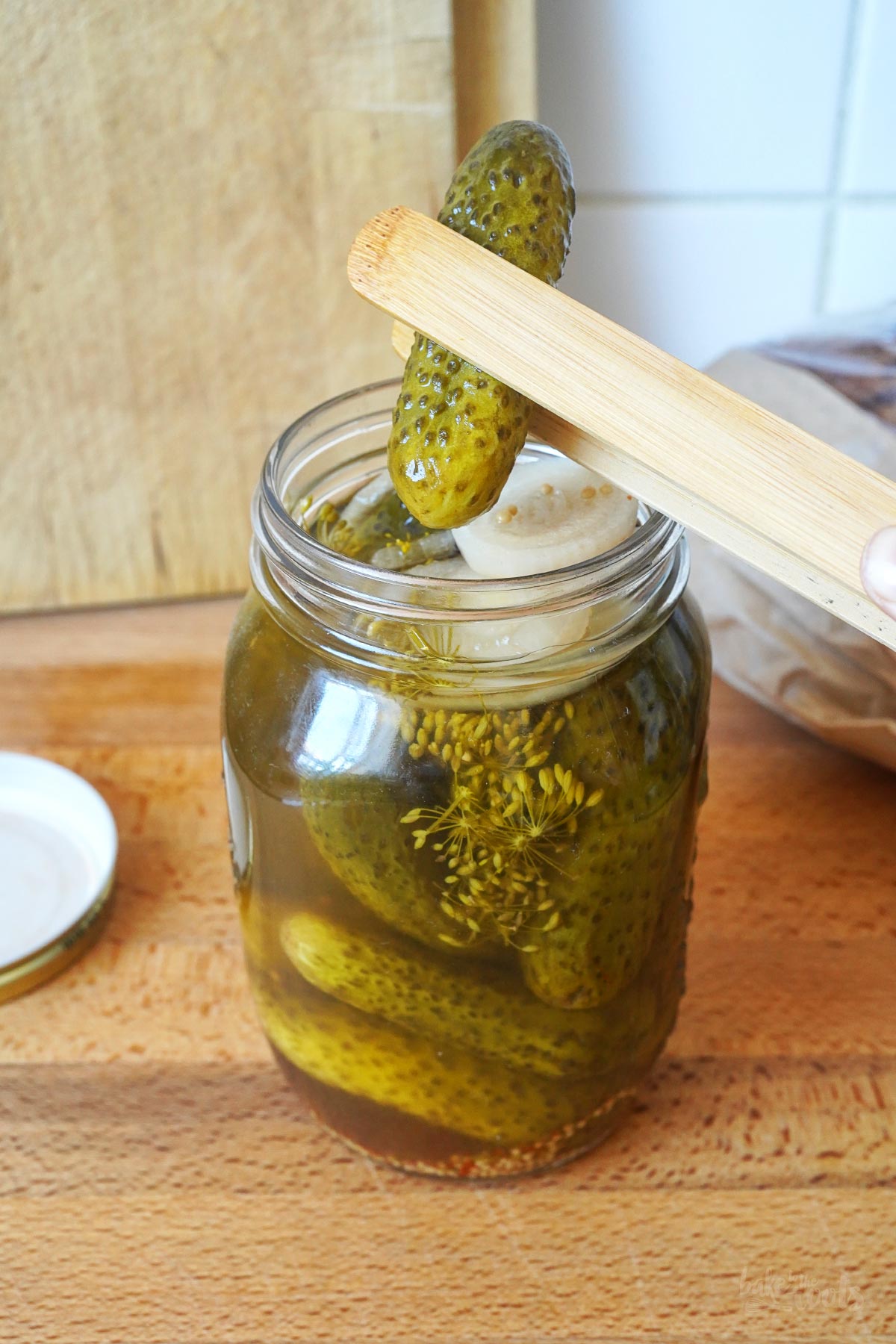
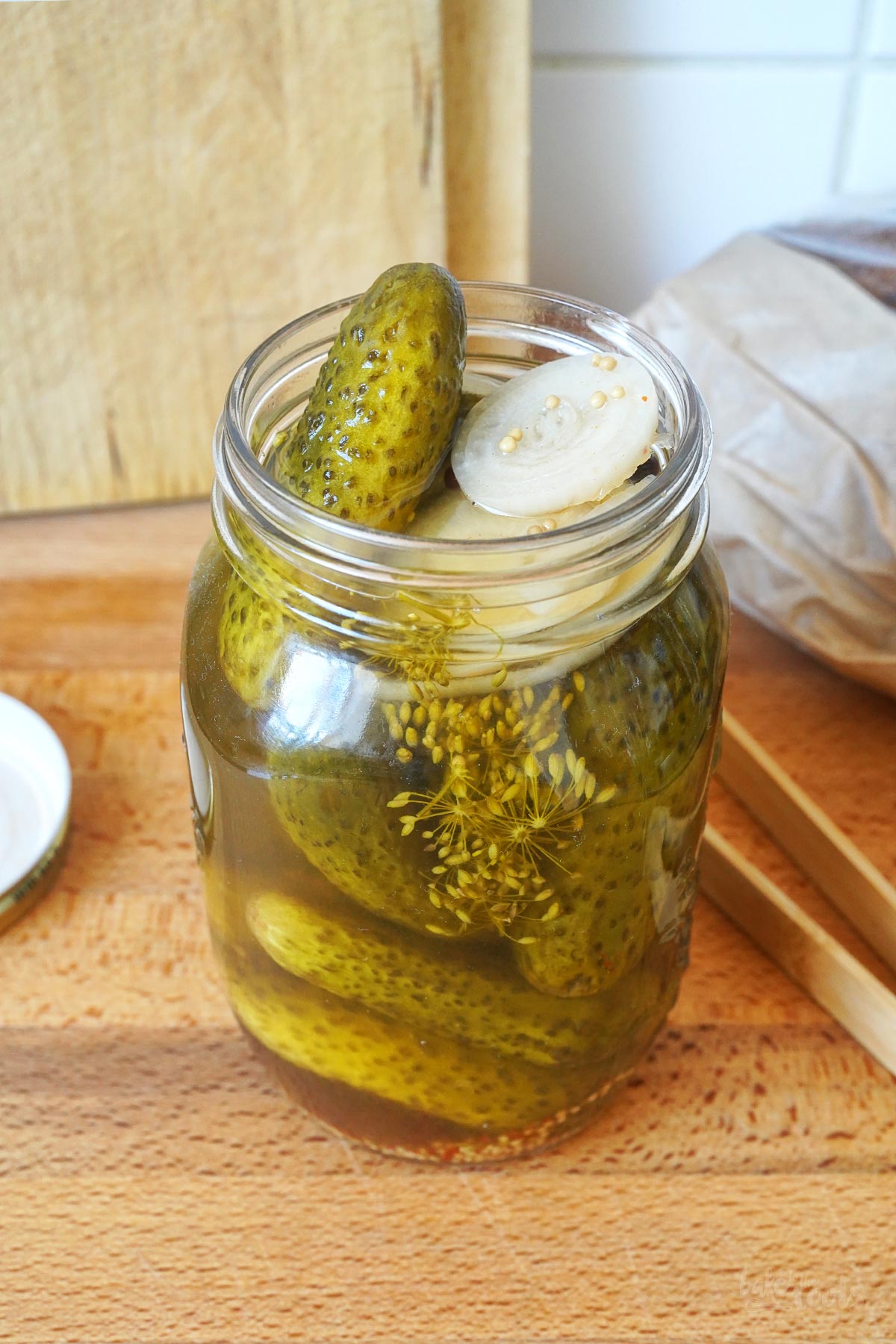
Pickling veggies is incredibly easy. You just need to clean the veggies thoroughly, pack them into glass jars, and pour a brine made of vinegar, water, and spices over them. As for the spices, there are honestly plenty of options. Dill and mustard seeds are probably the most common choices. We happened to find some fresh dill sprigs (the ones with yellow flowers) right next to the cucumbers in the supermarket and took them home for the pickling process. You can see it in one of the photos – the green herb with the small yellow flowers.
Of course, you could have used regular dill here, too. But this particular herb was a great alterative. A supermarket employee who placed that right next to the little cucumbers clearly knew what they were doing there…
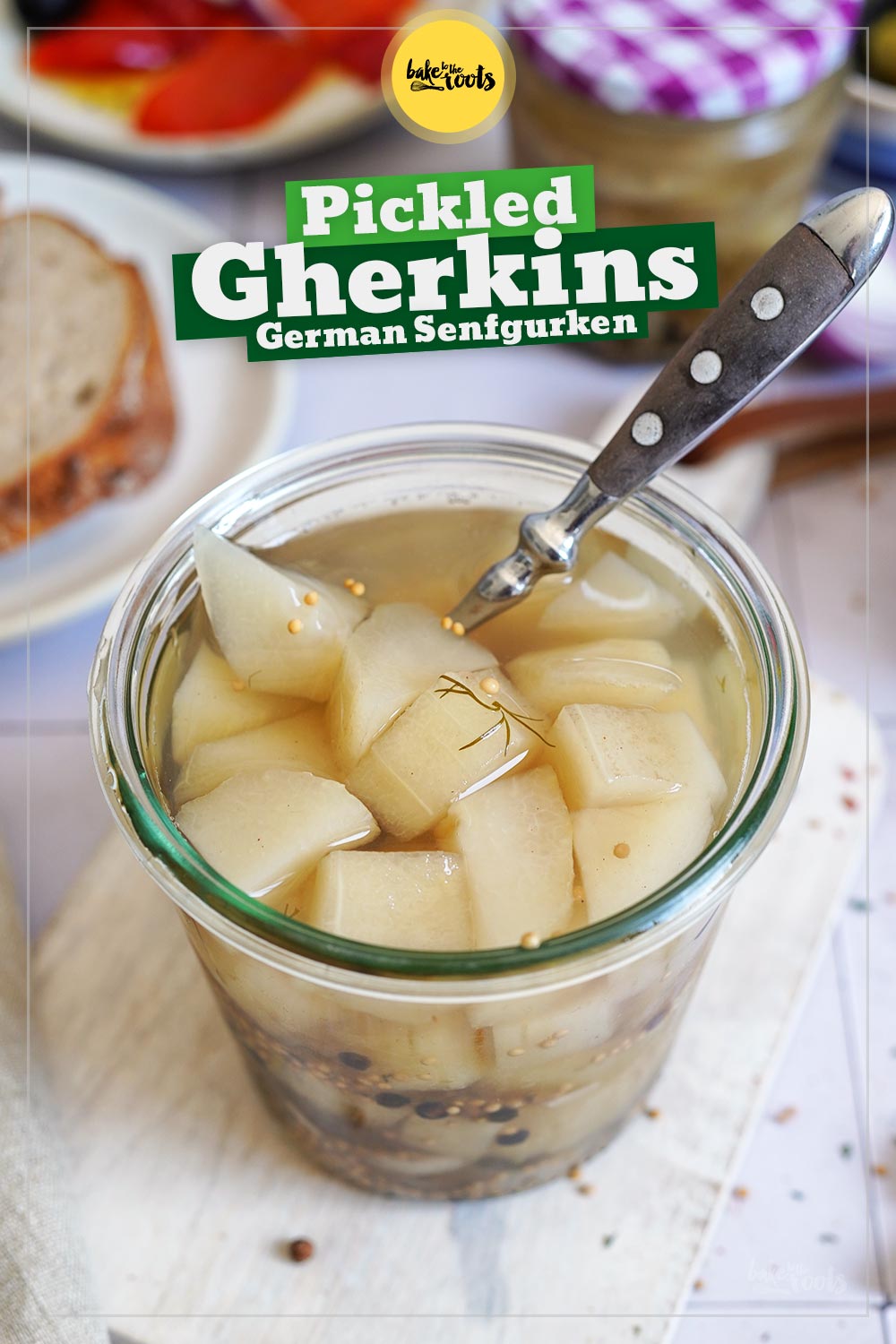

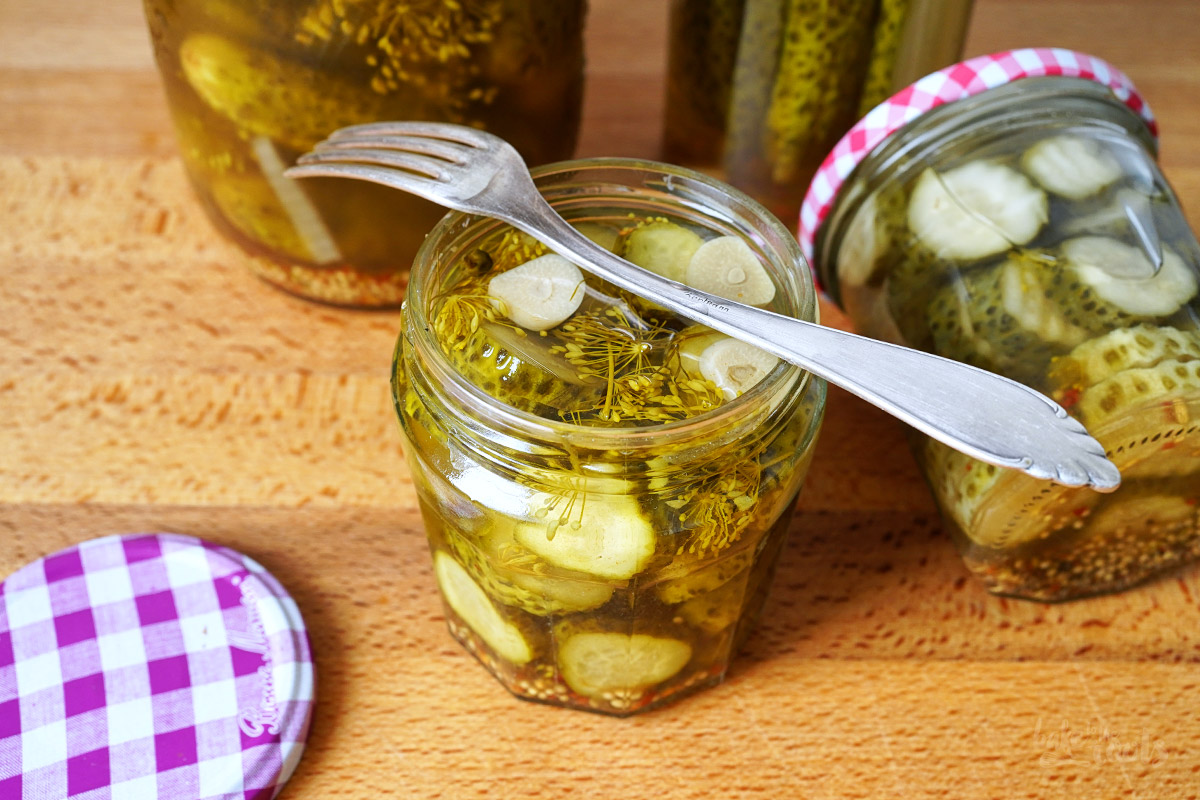
If you’re in the mood to pickle even more, our recipe for Pickled Gherkins with Mustard Seeds is always a huge hit on the blog during the harvest season. For that recipe you use larger field cucumbers/braising cucumbers and not the regular small cucumbers/gherkins. Really delicious!
If you’re feeling a bit more adventurous when it comes to pickled gherkins, you should definitely check out our recipe for Deep-fried Dill Pickles with Ranch Dip. It might sound a bit wild, but they taste absolutely spectacular! They’re also perfect for barbecues and the like.
INGREDIENTS / ZUTATEN
(2 large jars)
about 35-42 oz. (1–1.2kg) small pickling cucumbers
1 small red onion, sliced into rings
a few sprigs of dill, chopped
about 17 fl. oz. (500ml) vinegar* (5% acidity)
about 17 fl. oz. (500ml) water
2 tbsp. salt
2 tsp. mustard seeds*
1 tsp. peppercorns*
4–5 juniper berries*
1 pinch of allspice*
a few chilli flakes* (optional)
(2 große Gläser)
etwa 1- 1,2kg kleine Einlegegurken
1 kleine rote Zwiebel, in Ringen
einige Zweige Dillkraut, gehackt
etwa 500ml Branntweinessig* (5% Säure)
etwa 500ml Wasser
2 EL Salz
2 TL Senfkörner*
1 TL Pfefferkörner*
4-5 Wacholderbeeren*
1 Prise Piment*
einige Chiliflocken* (optional)
Possible Spices for Pickles
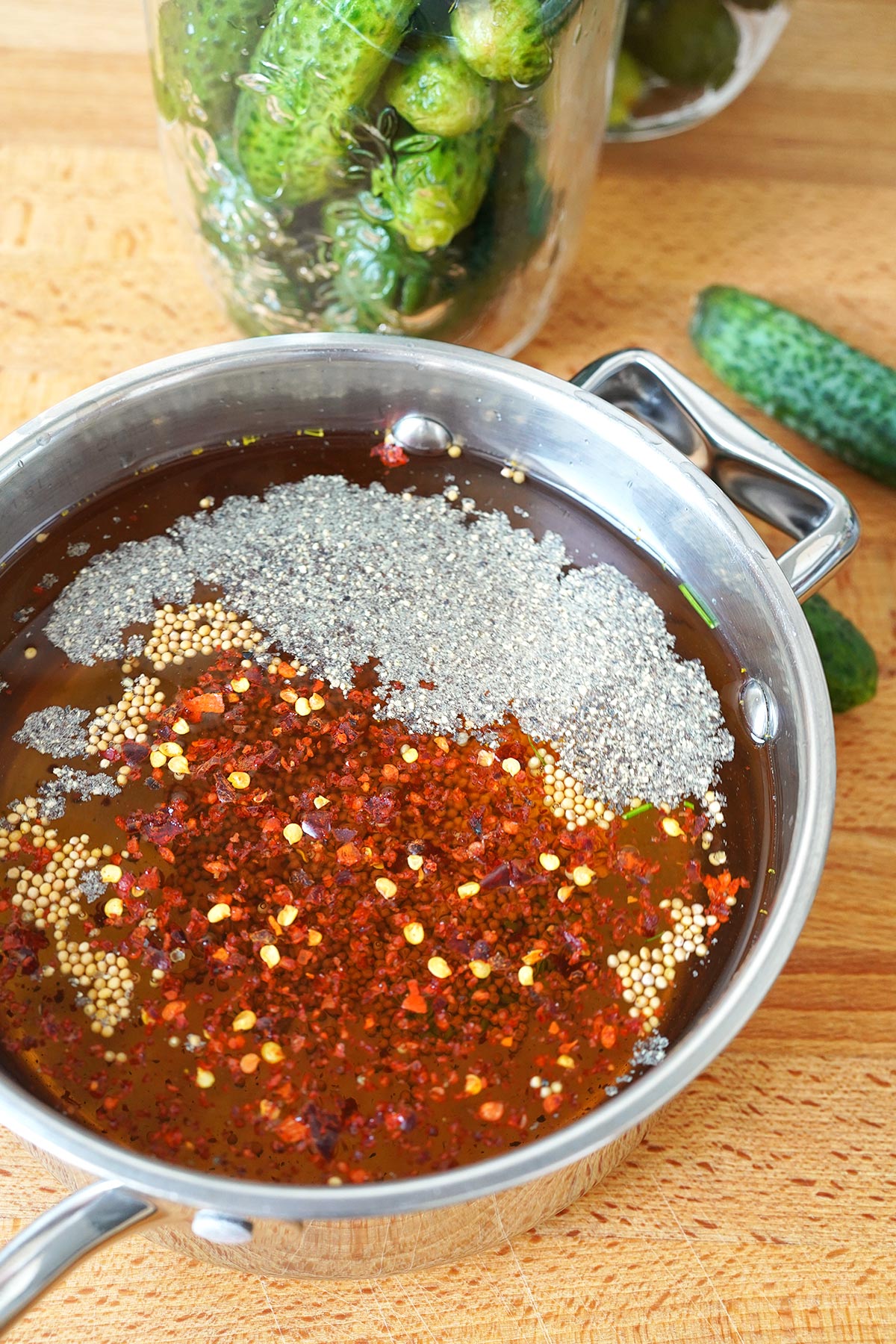
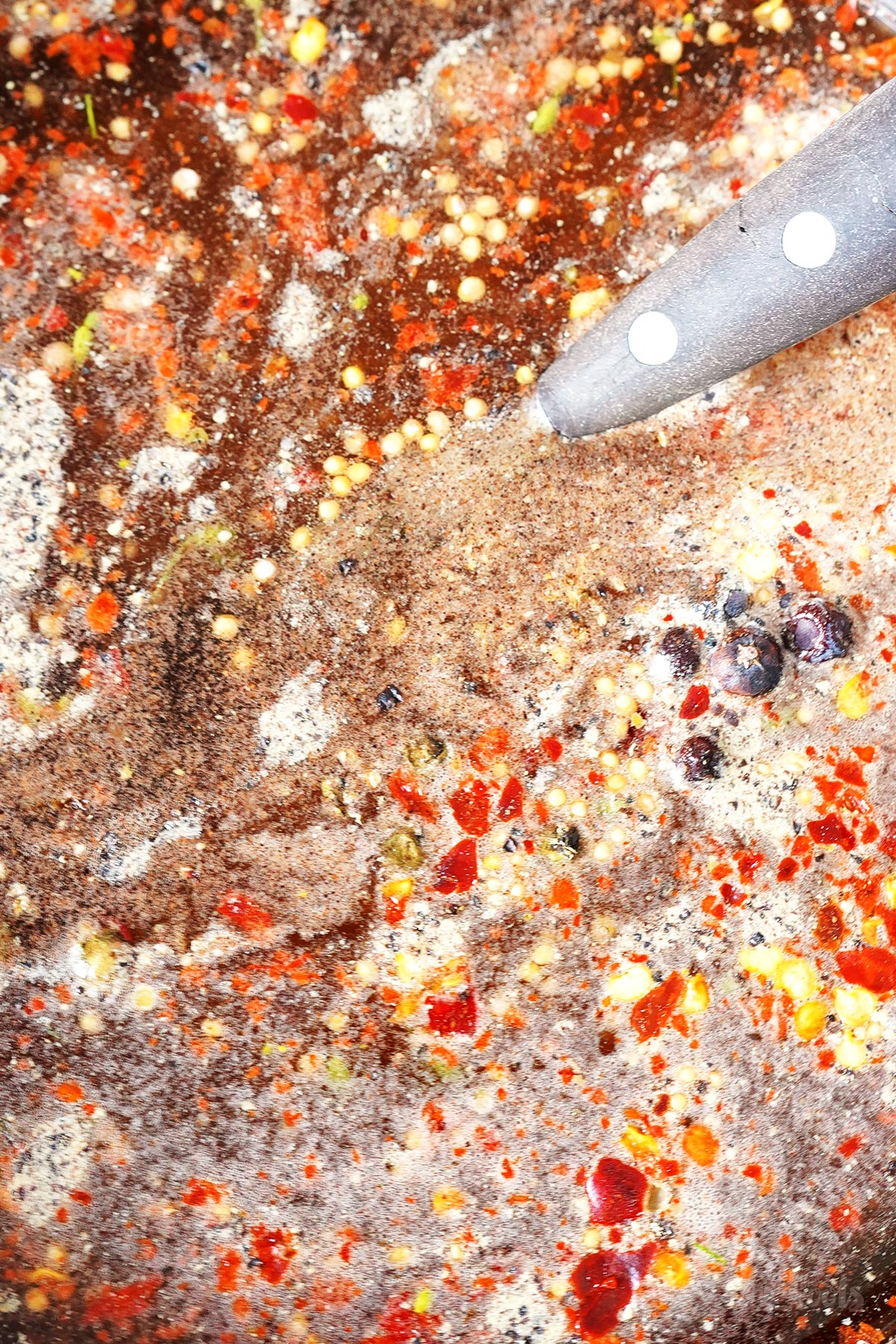
As previously mentioned, various ingredients can be used to season those small cucumbers. Dill, mustard seeds, and pepper form the foundation of many recipes. Our recipe also incorporates juniper berries, allspice, and some chili flakes. After all, a little heat never hurts.
Small pearl onions or garlic would also be excellent additions. Bay leaves work well, as do savory or tarragon. However, it is best not to overdo it with the spices. They should complement the flavor of the pickles rather than completely overpower it.
A few additional tips:
+ When prepared hygienically and stored correctly, unopened jars of pickles will easily keep for up to a year.
+ Once opened, jars should be stored in the refrigerator and consumed within 1-2 months.
+ Avoid fishing the pickles out of the jar with your fingers to help them stay crisp. Contact with the skin of your fingers introduces bacteria and yeast into the jar, which can affect the texture of the pickles.
DIRECTIONS / ZUBEREITUNG
1. Sterilize the glass jars* and lids. The easiest method is probably boiling them in water for about 10 minutes. Alternatively, you can place the glass jars in the oven at a temperature of 120°C (250°F) for about 12–15 minutes. This is often easier when using large glass jars. Be careful with the lids if they have plastic parts or a special coating that can’t handle heat.
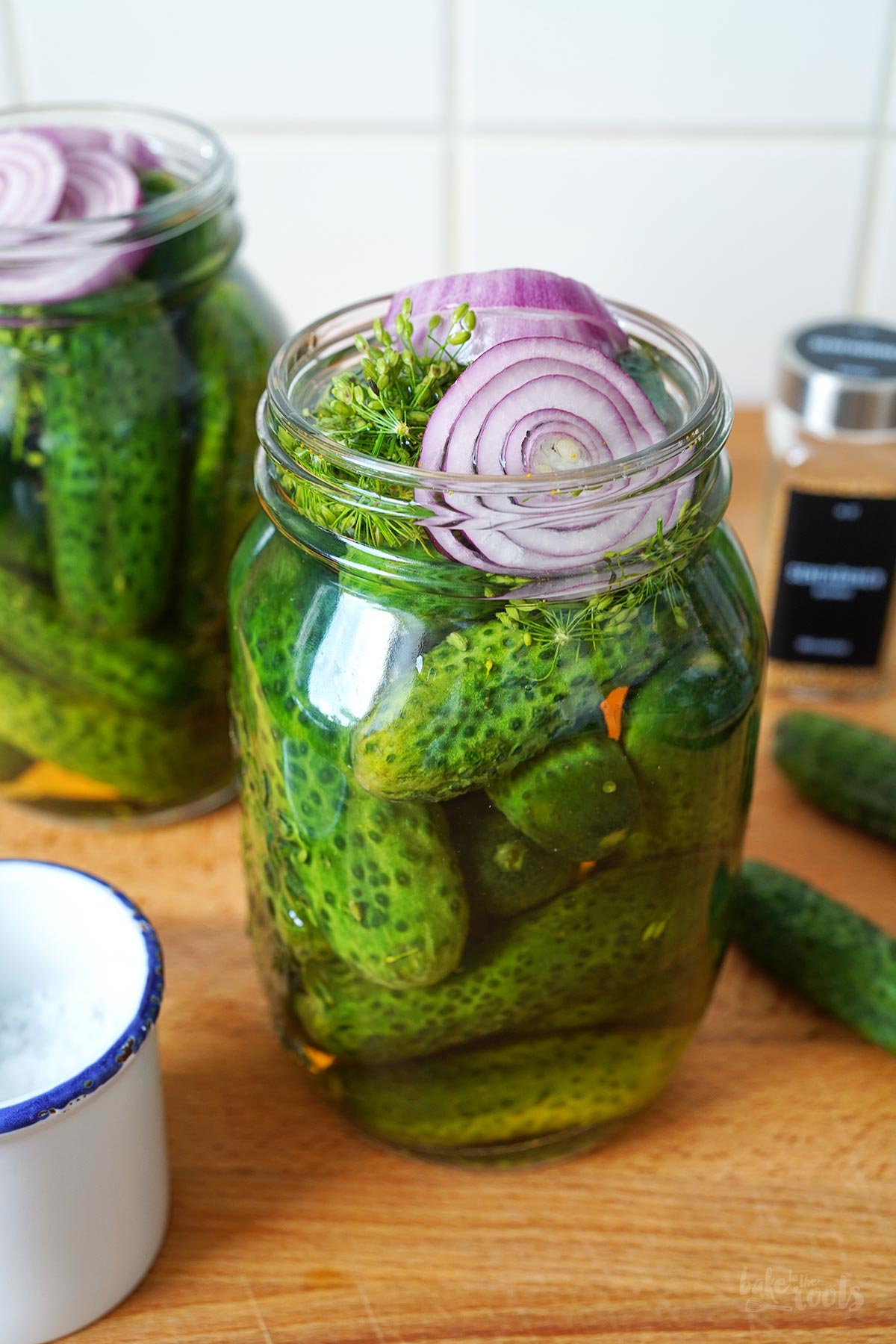
2. Clean the small cucumbers and let them soak in water for about 1 hour. After that bath, scrub the cucumbers thoroughly and let them drain. Peel the onion and cut it into rings. Rinse the dill, let it drain, and then chop it coarsely.
3. Layer the cucumbers, onion, and dill into the sterilized jars – the less space between the cucumbers, the better. Fill the jars about halfway with vinegar, then add water until the jars are filled to the brim. Pour the liquid from the glass jars into a saucepan.
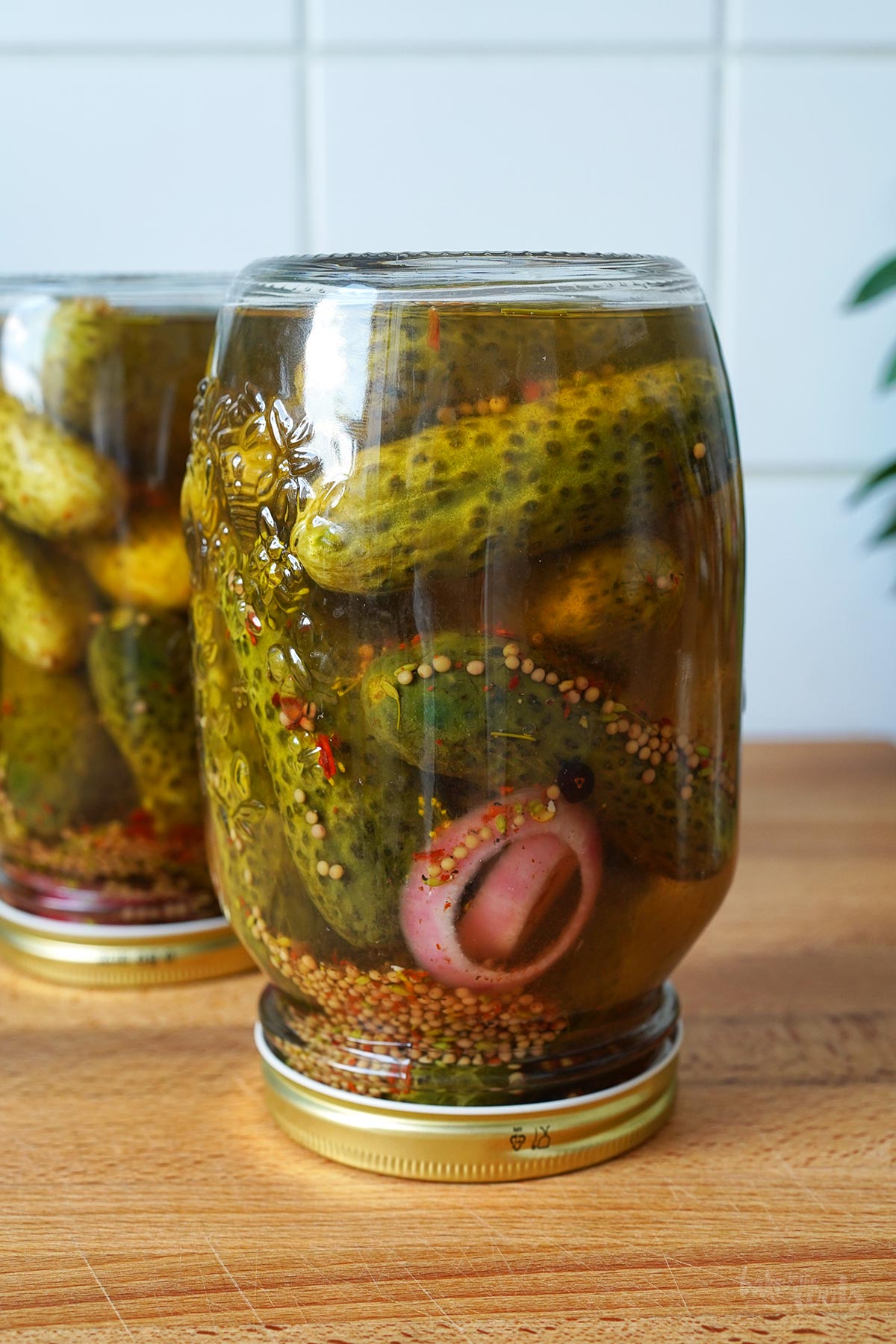
4. Add salt, mustard seeds, peppercorns, juniper berries, allspice, and chili flakes (optional) to the pot. Bring the liquid to a boil, then pour it back into the glass jars (including all the spices), seal them tightly with the lids, and let them cool upside down on a kitchen towel.
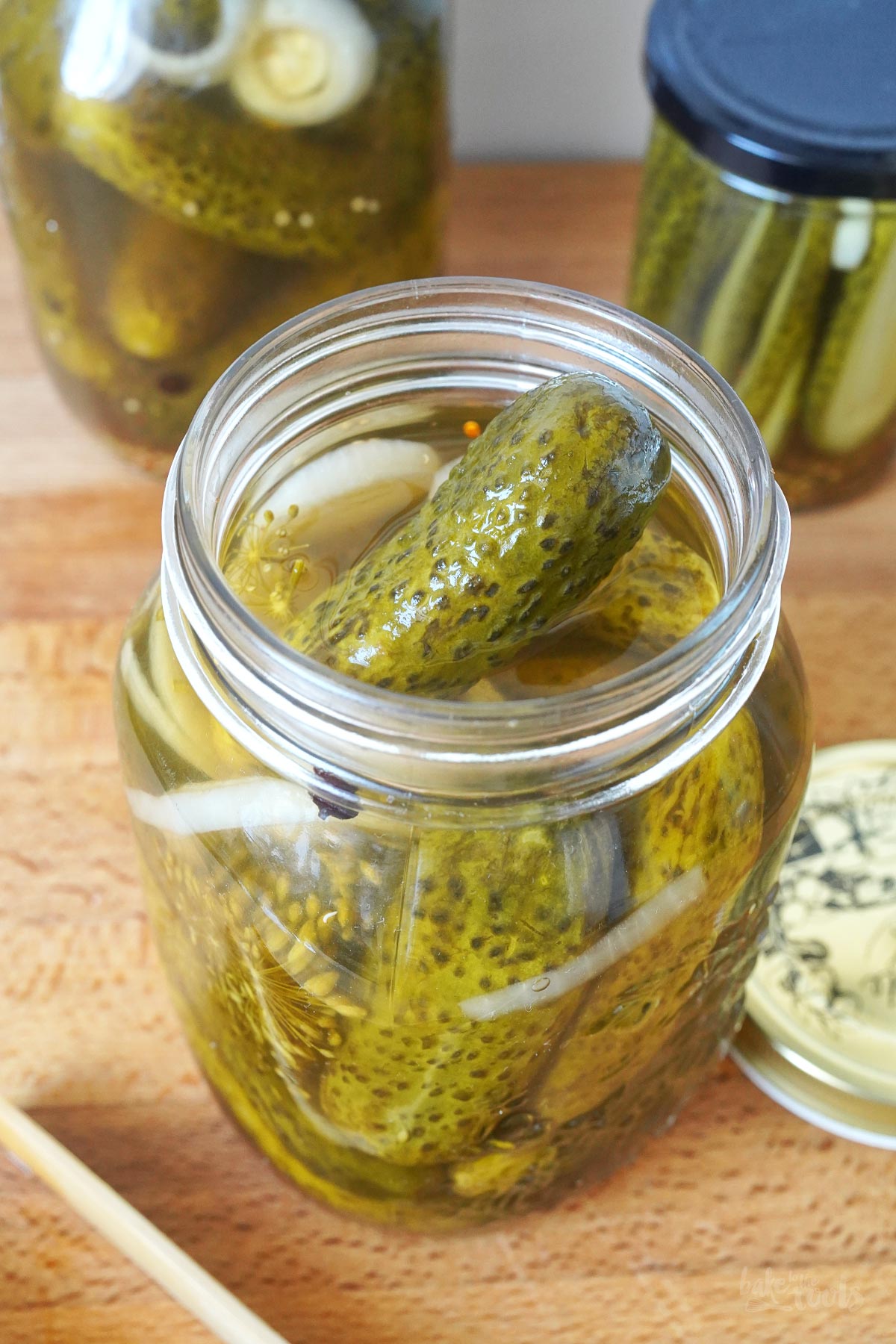
5. Let the cucumbers pickle in a cool, dark place for at least 4 weeks. If you worked with clean equipment, the unopened pickles will keep for about a year. Once opened, store the glass jars in the fridge and consume the pickled cucumbers within 1–2 months.
1. Die Einmachgläser mit Schraubverschluss* desinfizieren – die einfachste Methode ist hier wohl Auskochen für etwa 10 Minuten. Alternativ kann man die Gläser auch bei 120°C (250°F) für etwa 12-15 Minuten in den Ofen stellen – ist bei großen Gläsern oft einfacher. Vorsicht bei Deckeln, wenn Plastik dran oder eine Beschichtung drauf ist.
2. Die Gurken grob säubern und für etwa 1 Stunde in Wasser einlegen, dann noch einmal ordentlich abschrubben und abtropfen lassen. Die Zwiebel schälen und in Ringe schneiden. Das Dillkraut abspülen, abtropfen lassen und dann grob hacken.
3. Gurken, Zwiebelringe und Dillkraut in die ausgekochten Gläser schichten – je weniger Luft zwischen den Gurken ist, umso besser. Die Gläser etwa zur Hälfte mit Essig auffüllen, dann Wasser dazugeben, bis die Gläser randvoll sind. Die Flüssigkeit aus den Gläsern in einen Topf schütten.
4. Salz, Senfkörner, Pfefferkörner, Wacholderbeeren, Piment und Chiliflocken (optional) in den Topf dazugeben. Die Flüssigkeit einmal gut aufkochen lassen, dann wieder in die beiden Gläser einfüllen (mit allen Gewürzen), mit den Deckeln gut verschließen und umgedreht auf einem Küchentuch abkühlen lassen.
5. Die eingelegten Gurken an einem kühlen und dunklen Ort für mindestens 4 Wochen ziehen lassen. Wenn man sauber gearbeitet hat, halten die Essiggurken ungeöffnet etwa 1 Jahr durch. Nach dem Öffnen im Kühlschrank aufbewahren und innerhalb von 1-2 Monaten aufbrauchen.
Craving more? Keep in touch on Facebook, Instagram and Pinterest for new post updates and more. You can also contact me with any questions or inquiries!
Here is a version of the recipe you can print easily.
Print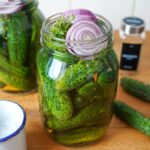
Homemade Pickled Gherkins with Yellow Dill & Mustard Seeds
- Prep Time: 00:20
- Cook Time: 00:05
- Total Time: 01:30
- Yield: 2 1x
- Category: Homemade Stuff
- Method: -
- Cuisine: Germany
- Diet: Vegan
Description
Pickling veggies is easy and you have full control over the ingredients and flavors. That’s why we pickle cucumbers (gherkins) at home for many years already.
Ingredients
about 35-42 oz. (1–1.2kg) small pickling cucumbers
1 small red onion, sliced into rings
a few sprigs of dill, chopped
about 17 fl. oz. (500ml) vinegar* (5% acidity)
about 17 fl. oz. (500ml) water
2 tbsp. salt
2 tsp. mustard seeds*
1 tsp. peppercorns*
4–5 juniper berries*
1 pinch of allspice*
a few chilli flakes* (optional)
Instructions
1. Sterilize the glass jars* and lids. The easiest method is probably boiling them in water for about 10 minutes. Alternatively, you can place the glass jars in the oven at a temperature of 120°C (250°F) for about 12–15 minutes. This is often easier when using large glass jars. Be careful with the lids if they have plastic parts or a special coating that can’t handle heat.
2. Clean the small cucumbers and let them soak in water for about 1 hour. After that bath, scrub the cucumbers thoroughly and let them drain. Peel the onion and cut it into rings. Rinse the dill, let it drain, and then chop it coarsely.
3. Layer the cucumbers, onion, and dill into the sterilized jars – the less space between the cucumbers, the better. Fill the jars about halfway with vinegar, then add water until the jars are filled to the brim. Pour the liquid from the glass jars into a saucepan.
4. Add salt, mustard seeds, peppercorns, juniper berries, allspice, and chili flakes (optional) to the pot. Bring the liquid to a boil, then pour it back into the glass jars (including all the spices), seal them tightly with the lids, and let them cool upside down on a kitchen towel.
5. Let the cucumbers pickle in a cool, dark place for at least 4 weeks. If you worked with clean equipment, the unopened pickles will keep for about a year. Once opened, store the glass jars in the fridge and consume the pickled cucumbers within 1–2 months.
Notes
Make something amazing in the kitchen!
Links marked with an asterisk (*) are affiliate links (advertising/Werbung) to Amazon Germany. If you click on one of those links and buy something via this link, I will get a commission for that sale. The price of whatever you buy is not affected in any way by this.