


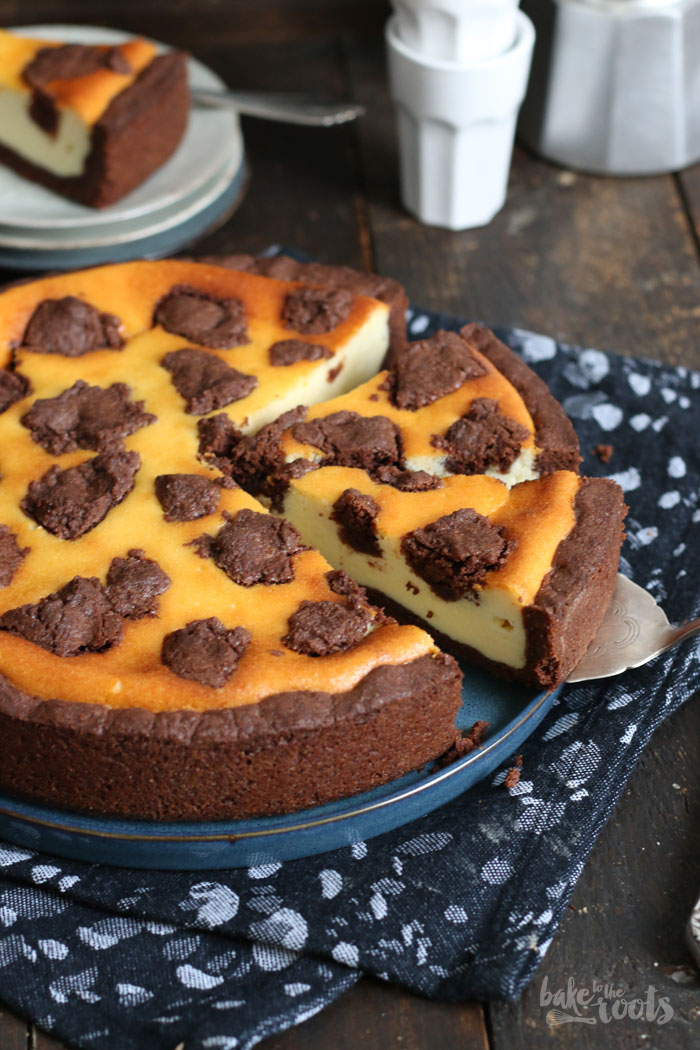
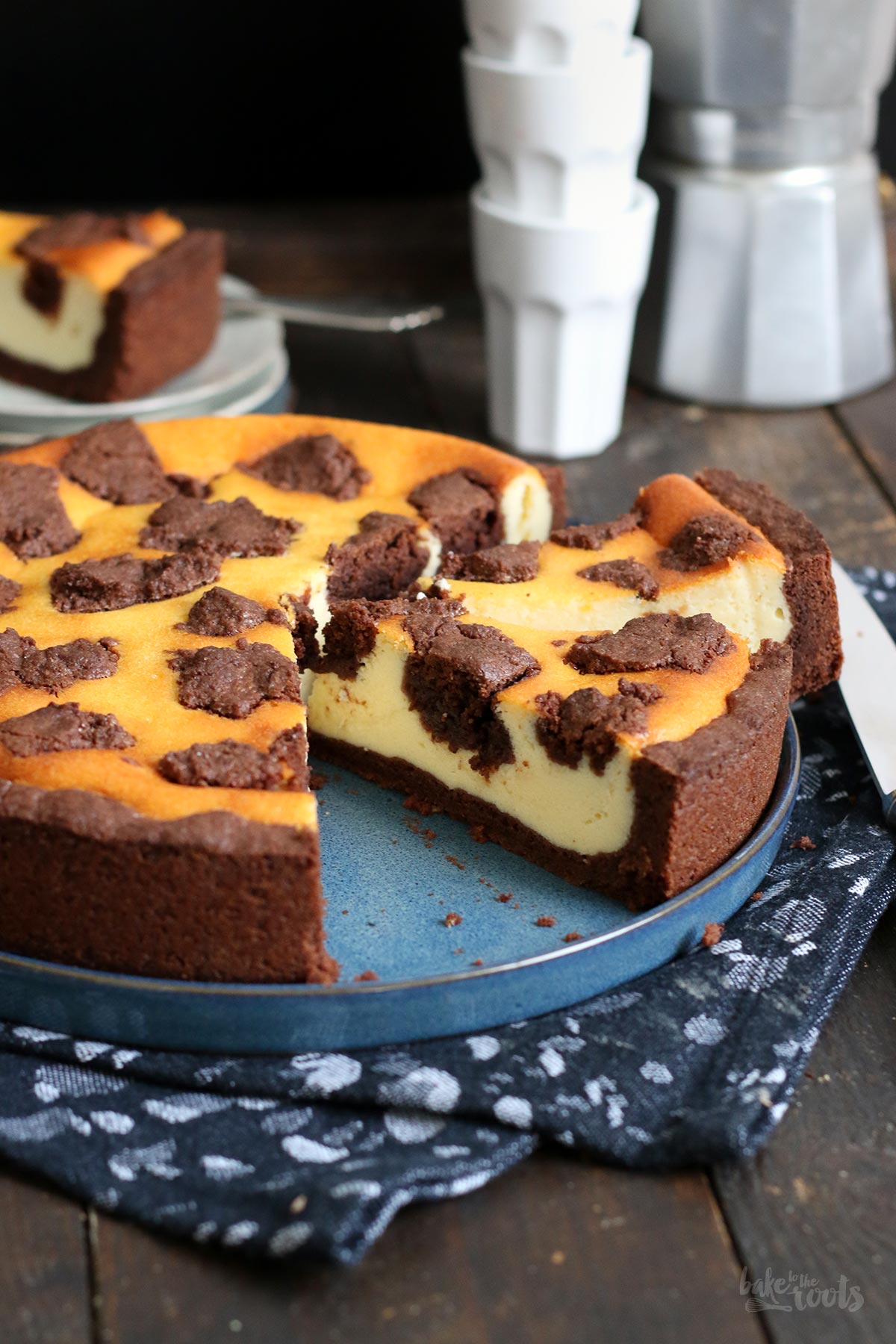
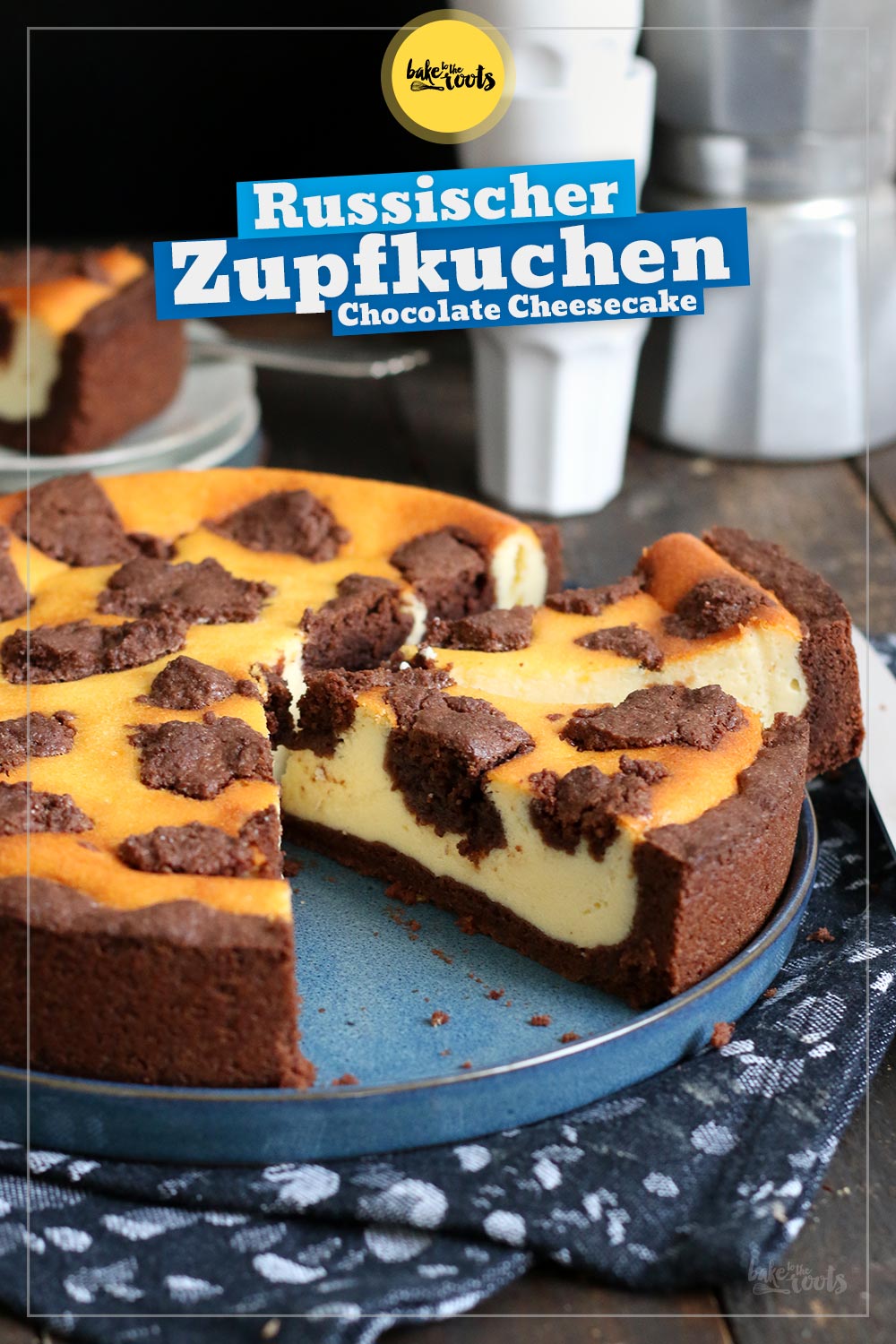
It’s probably one of the most popular cakes here in Germany, and most likely everyone knows it: Russischer Zupfkuchen! This delicious (chocolate) cheesecake is a must-have on any sweet table at a party. An absolute classic! But when asking someone from Russia or Eastern Europe what they think of this cake – they’ll probably respond with something like… WTF?! Russischer (aka. Russian) Zupfkuchen? What’s that supposed to be?
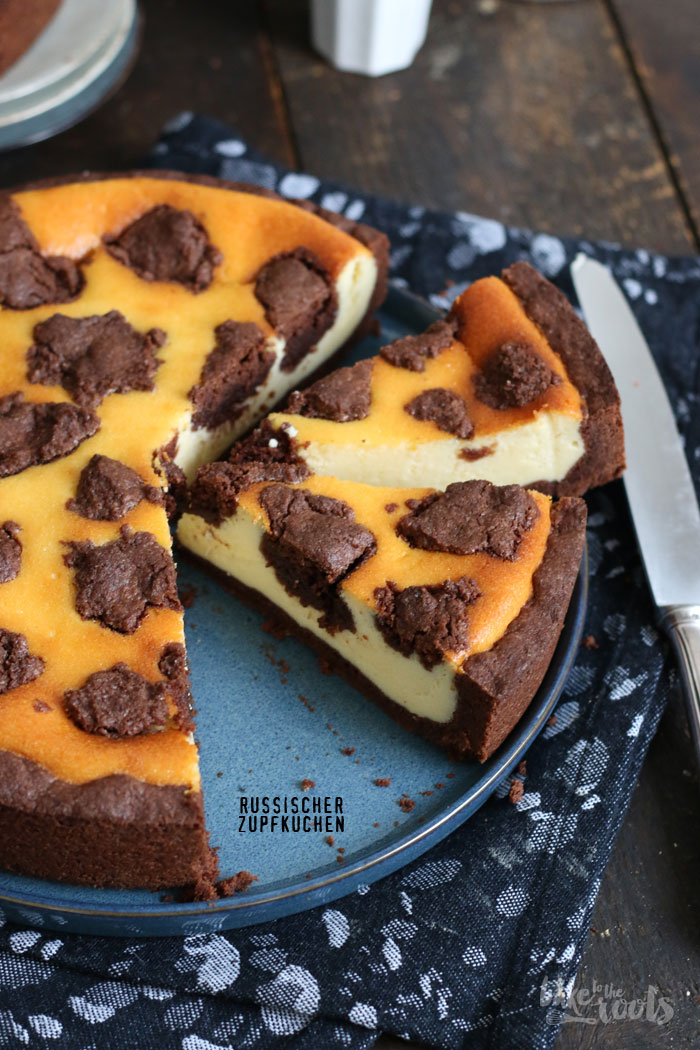
Russischer Zupfkuchen isn’t a recipe from some sweet old Russian »babushka« who baked it back in the good old days of the Tsars. If you think the origins are something like that – you are fundamentally wrong. And anyone who thinks the cake might originate in East Germany is equally mistaken. Probably. The answer to where this cake is coming from isn’t so simple…
Let’s take a more objective approach. The name »Zupfkuchen« (in English something like »pulled cake«) almost certainly comes from the pieces of chocolate dough that are torn or »pulled apart« and scattered on the surface of the cake before baking. However, its geographical association with Russia actually has nothing to do with the country. The cake isn’t particularly well-known in good old Russia. If the cake appears anywhere in Russia, it’s usually called something like »German Quark Cake«. No idea how its spelled in Russian… ;P
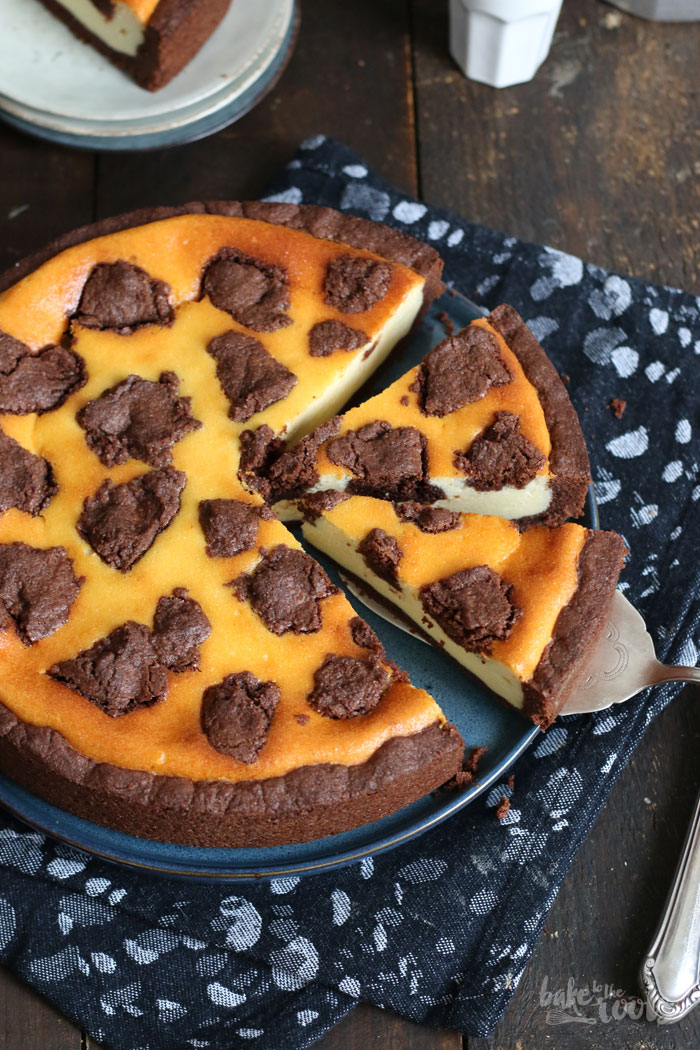
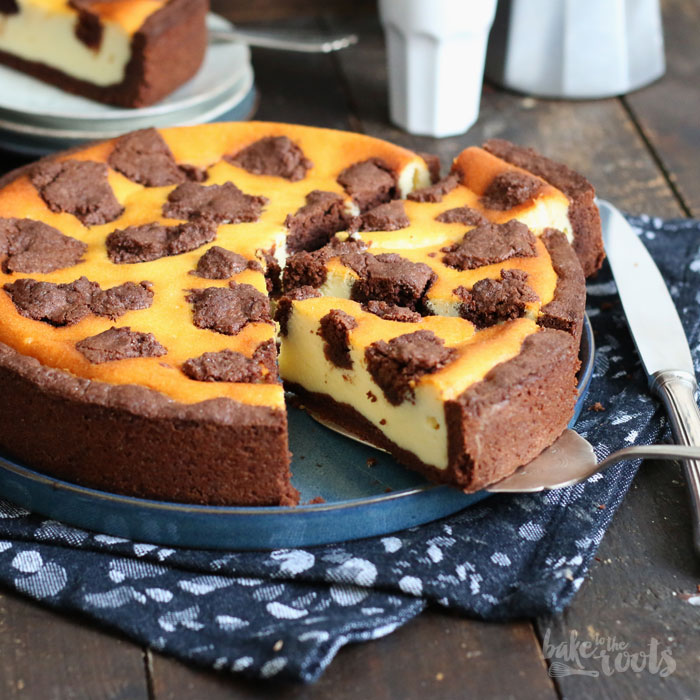
Anyway. Some claim the name and association with Russia comes from the shape of the pulled pieces of dough. Some say they are supposed to resemble the onion domes of Russian churches. That would at least be one explanation, and one that could stand. But that doesn’t necessarily mean the cake itself is of Russian origin.
Other people say the cake is the invention of a large baking mix manufacturer who simply came up with a marketing idea – something that fit the time (it all started in the 90s). We’ll probably never know for sure. But it doesn’t really matter. The cake is incredibly delicious and would certainly foster German-Russian relations if everyone sat down together and enjoyed this tasty treat – together. It wouldn’t hurt if a more friendly relationship developed.
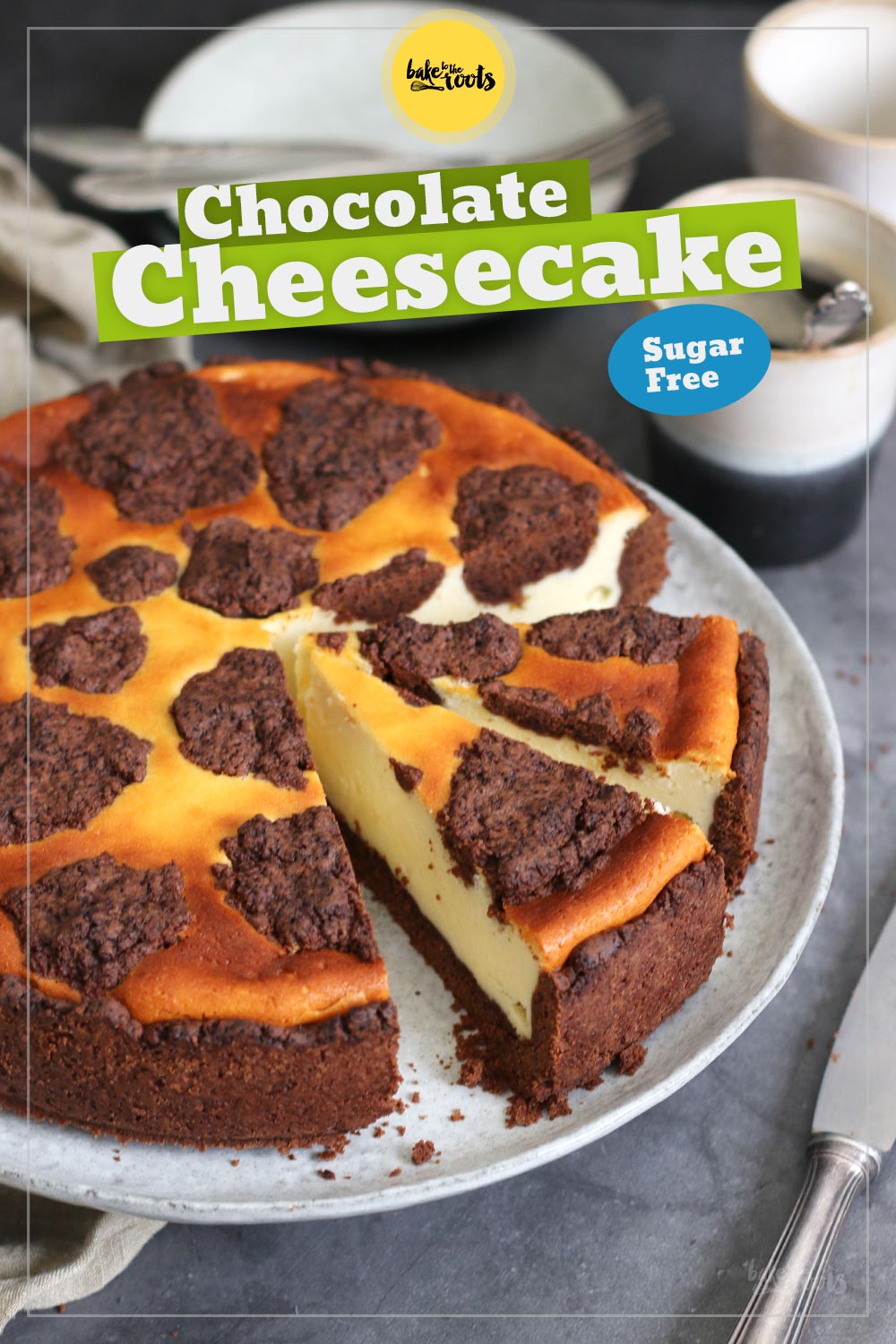
If the classic version is a bit too rich for you (we use quite a bit of fat and sugar here), you can also check out our sugar-free version. Our Sugar-Free Russischer Zupfkuchen is just as delicious as the original one. It has a few calories less thanks to the use of a sugar substitute.
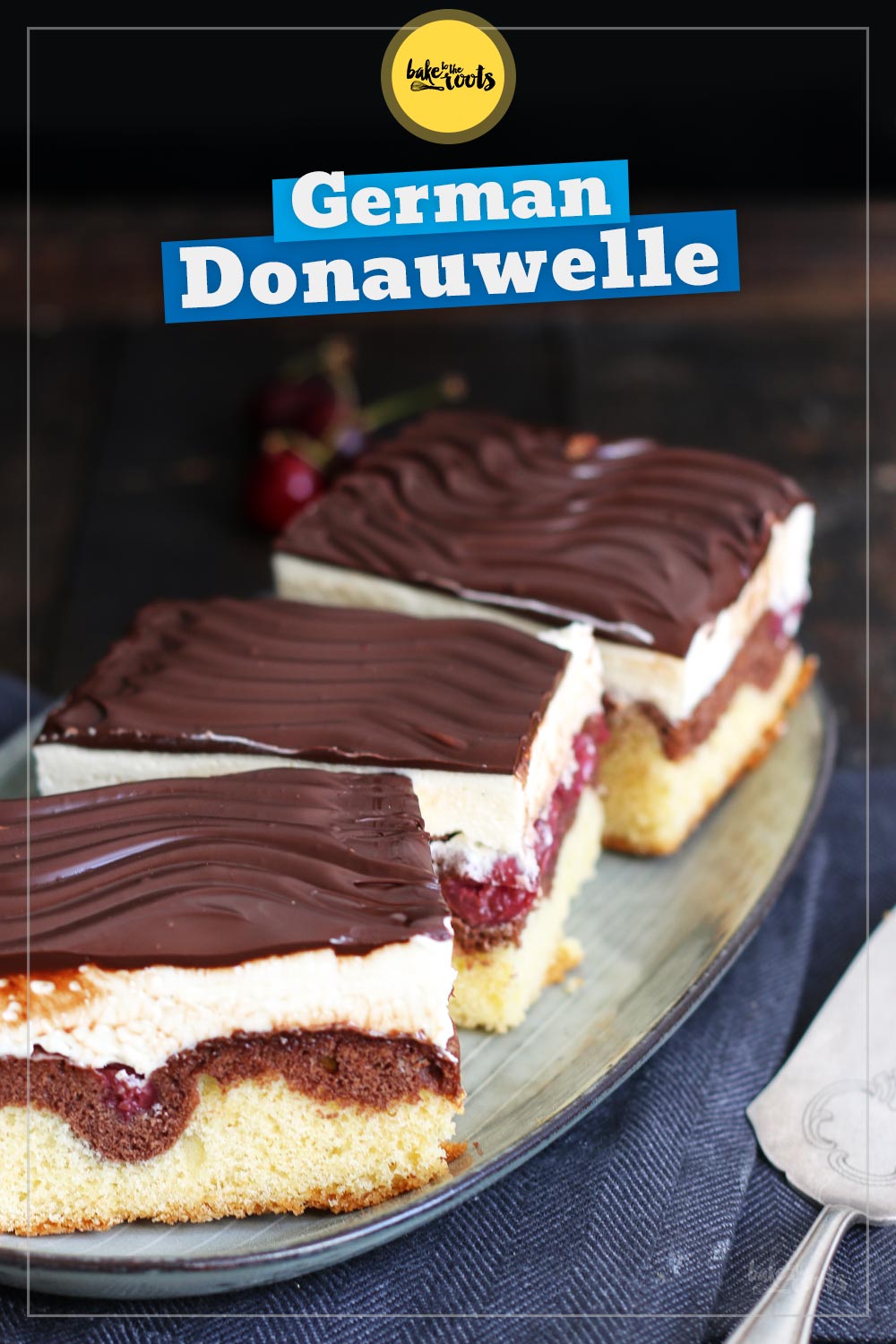
Another classic German bake we also love to make is the classic German Donauwelle, sometimes also called Snow White Cake. The origin of this cake isn’t entirely clear either – only here we’re not »arguing« with Russia, but with Austria. Some claim that the Donauwelle cake was born in Vienna. Based on the name, that would probably make sense… even though the Danube River originates in Germany. Aaaanyway. Whoever invented this cake: well done! A truly delicious one!
INGREDIENTS / ZUTATEN
For the dough:
3 cups (375g) all-purpose flour*
3 tsp. baking powder
1/3 cup (40g) cocoa powder*
1 cup (200g) sugar (fine)*
1 tsp. vanilla extract*
1 large egg
7 oz. (200g) butter, at room temperature
For the filling:
1 1/8 cup (250g) butter, melted
18 oz. (500g) quark (20% fat)
1 cup (200g) sugar (fine)*
2 tsp. vanilla extract*
3 large eggs
1/3 cup (40g) cornstarch*
Für den Teig:
375g Mehl (Type 405)*
3 TL Backpulver
40g Kakaopulver*
200g Zucker (fein)*
1 TL Vanille Extrakt*
1 Ei (L)
200g weiche Butter
Für die Füllung:
250g Butter, geschmolzen
500g Quark (20% Fett)
200g Zucker (fein)*
2 TL Vanille Extrakt*
3 Eier (L)
40g Speisestärke*
DIRECTIONS / ZUBEREITUNG
1. In a large bowl mix flour, baking powder and cocoa powder. Add sugar, vanilla extract, the egg and butter. Mix/knead to get a smooth dough. Wrap it in plastic wrap and let it chill in the fridge for about 30 minutes.
2. Preheat the oven to 180°C (350°F). Grease a 26cm springform tin* or line it with baking parchment and set aside. For the filling, melt the butter and allow it to cool.
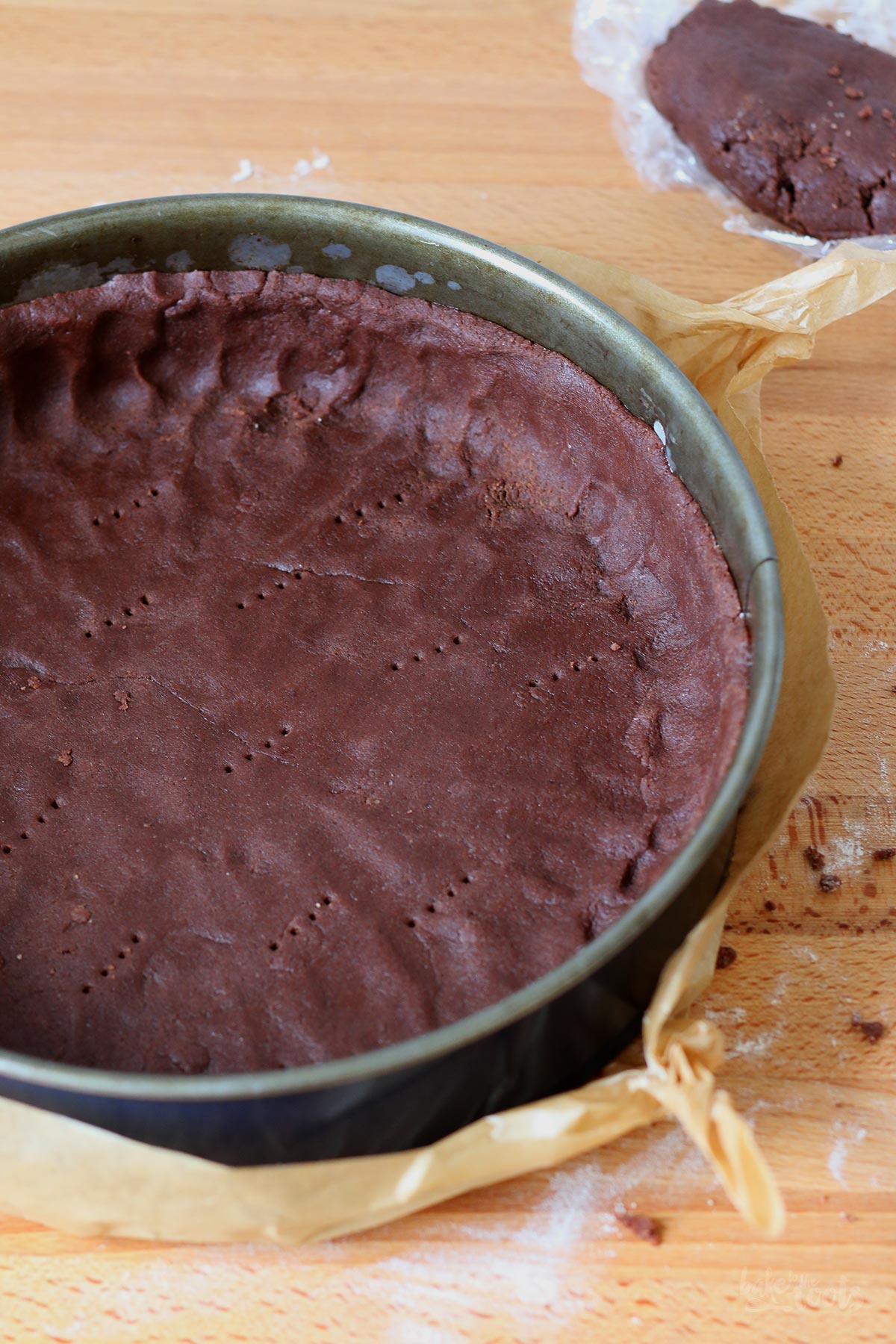
3. Roll out about half of the chocolate dough to the size of the springform tin, place it inside the baking tin and press it to the bottom. Use about half of the remaining dough and shape it into a long log – place that inside the springform tin as well and press it to the sides to create a nice crust. The rest of the dough is for the topping.
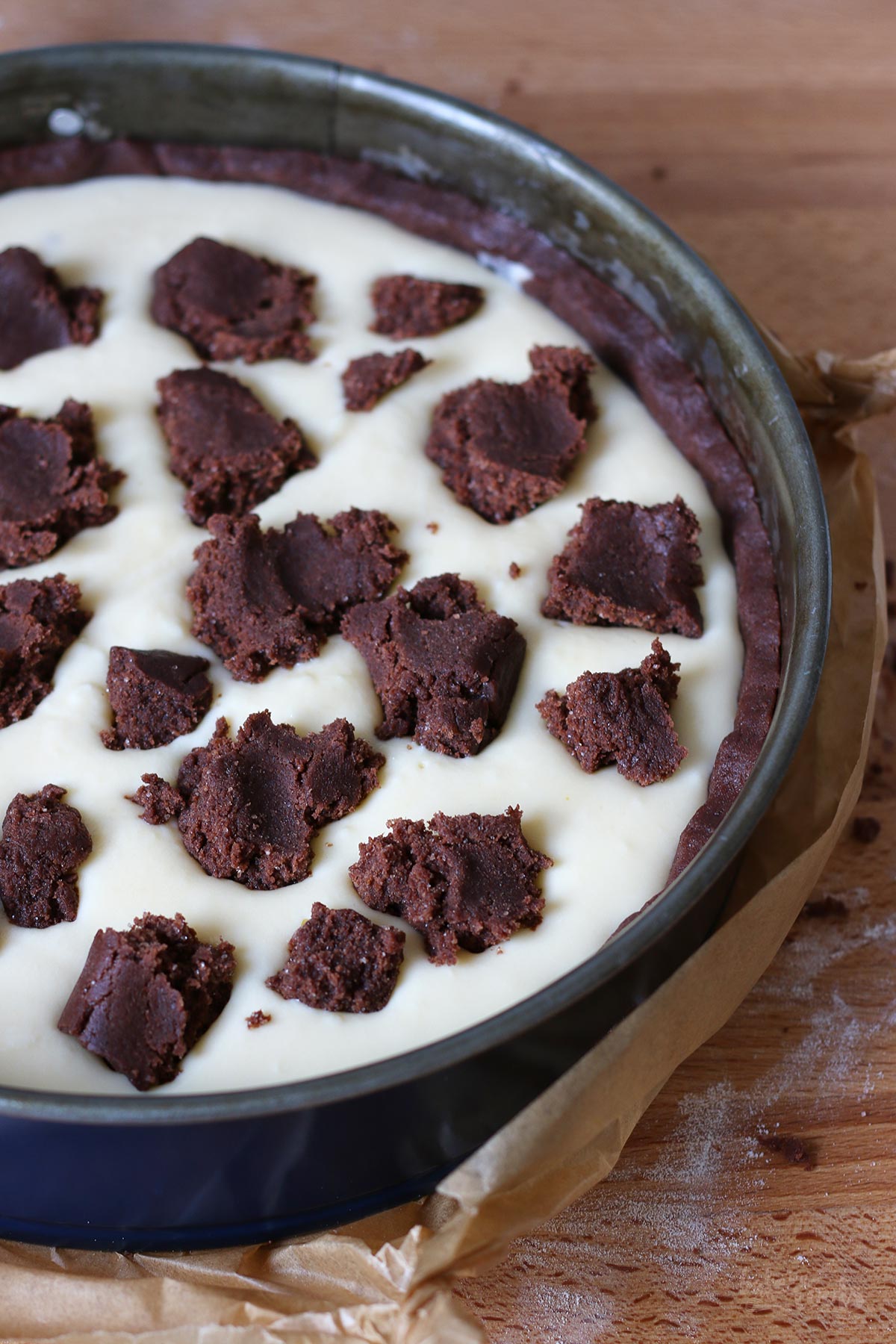
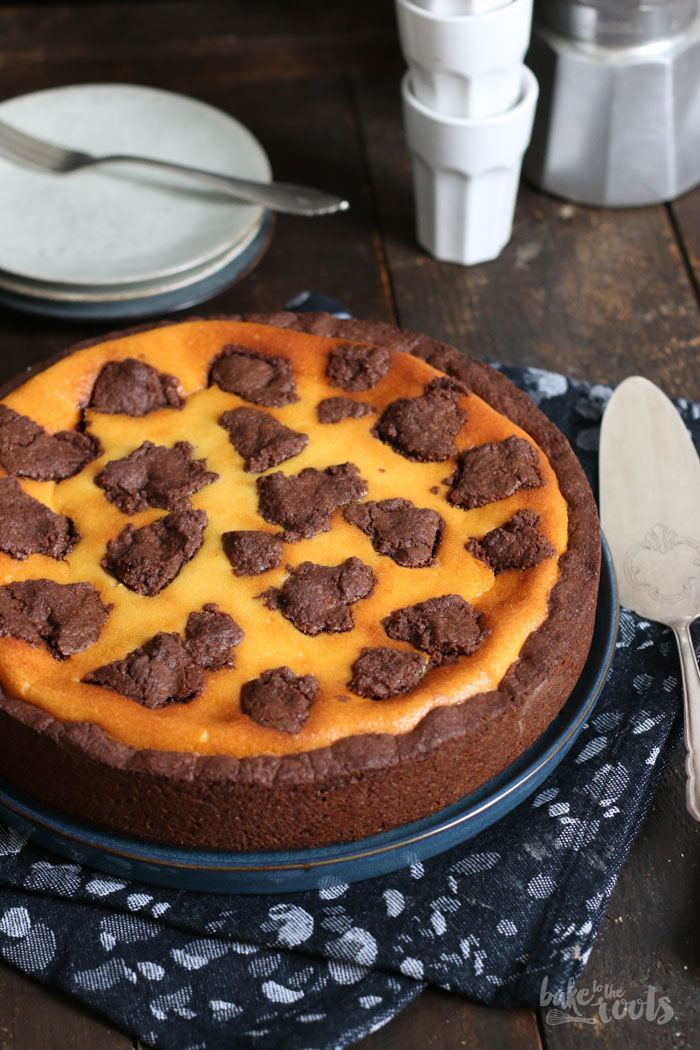
4. Combine the quark with sugar, vanilla extract, eggs, cornstarch and the melted butter and stir until well combined. Pour the mixture into the prepared baking tin and smooth it out. Tear the remaining chocolate dough into different-sized pieces and place them randomly on top of the filling. Bake the cake for about 60-65 minutes or until golden yellow. Let it cool completely on a wire rack before serving.
1. In einer großen Schüssel das Mehl, Backpulver und den Kakao vermischen. Zucker, Vanille Extrakt, Ei und Butter zugeben. Alles zu einem glatten Teig verkneten. Teig zu einer Kugel formen und in Klarsichtfolie einpacken. Für etwa 30 Minuten im Kühlschrank ruhen lassen.
2. Den Ofen auf 180°C (350°F) Ober-/Unterhitze vorheizen. Eine 26cm Springform* einfetten oder mit Backpapier auslegen und zur Seite stellen. Für die Füllung die Butter schmelzen und abkühlen lassen.
3. Etwa die Hälfte des Schokoteiges auf die Größe der Springform ausrollen, in die Springform legen am Boden festdrücken. Etwa die Hälfte des verbliebenen Teiges zu einer langen Rolle formen. Die Rolle an die Seiten der Springform pressen, um einen Rand zu formen. Den restlichen Teig für die »Zupfen« zur Seite stellen.
4. Den Magerquark mit Zucker, Vanille Extrakt, Eiern, Stärke und geschmolzener Butter in einer großen Schüssel zu einer homogenen Masse verrühren. Die Masse in die Springform füllen und glatt streichen. Den verbliebenen Teig in kleine Stücke reißen und diese dann gleichmäßig auf der Quarkmasse verteilen. Den Kuchen für etwa 60-65 Minuten backen, oder bis die Oberfläche leicht goldbraun ist. Den Kuchen auf einem Kuchengitter komplett auskühlen lassen.
Craving more? Keep in touch on Facebook, Instagram and Pinterest for new post updates and more. You can also contact me with any questions or inquiries!
Here is a version of the recipe you can print easily.
Print
Russischer Zupfkuchen aka. Chocolate Cheesecake
- Prep Time: 00:30
- Cook Time: 01:00
- Total Time: 02:00
- Yield: 1 1x
- Category: Cheesecakes
- Method: -
- Cuisine: Germany
- Diet: Vegetarian
Description
A delicious cheesecake with chocolate and a unique look. Russischer Zupfkuchen is an all-time classic everyone in Germany knows and loves!
Ingredients
For the dough:
3 cups (375g) all-purpose flour*
3 tsp. baking powder
1/3 cup (40g) cocoa powder*
1 cup (200g) sugar (fine)*
1 tsp. vanilla extract*
1 large egg
7 oz. (200g) butter, at room temperature
For the filling:
1 1/8 cup (250g) butter, melted
18 oz. (500g) quark (20% fat)
1 cup (200g) sugar (fine)*
2 tsp. vanilla extract*
3 large eggs
1/3 cup (40g) cornstarch*
Instructions
1. In a large bowl mix flour, baking powder and cocoa powder. Add sugar, vanilla extract, the egg and butter. Mix/knead to get a smooth dough. Wrap it in plastic wrap and let it chill in the fridge for about 30 minutes.
2. Preheat the oven to 180°C (350°F). Grease a 26cm springform tin* or line it with baking parchment and set aside. For the filling, melt the butter and allow it to cool.
3. Roll out about half of the chocolate dough to the size of the springform tin, place it inside the baking tin and press it to the bottom. Use about half of the remaining dough and shape it into a long log – place that inside the springform tin as well and press it to the sides to create a nice crust. The rest of the dough is for the topping.
4. Combine the quark with sugar, vanilla extract, eggs, cornstarch and the melted butter and stir until well combined. Pour the mixture into the prepared baking tin and smooth it out. Tear the remaining chocolate dough into different-sized pieces and place them randomly on top of the filling. Bake the cake for about 60-65 minutes or until golden yellow. Let it cool completely on a wire rack before serving.
Notes
Enjoy baking!
Links marked with an asterisk (*) are affiliate links (advertising/Werbung) to Amazon Germany. If you click on one of those links and buy something via this link, I will get a commission for that sale. The price of whatever you buy is not affected in any way by this.




Hi Marc,
My hostmother used to put some vanilla pudding mix into the filling, but no cornstarch. What does the difference do to the cake?
Hi Mark,
vanilla pudding mixture is basically only conrstarch with some vanilla flavor :)
That’s why I use cornstarch and vanilla paste or extract in all recipes that would ask for the pudding mix.
Cheers,
Marc
Hi Marc, Russischer Zupfkuchen is one of my favorite cakes. I live in New Zealand now where it is difficult to get Magerquark. Do you know if I could substitute it with cream cheese?
Thanks for sharing this recipe.
Cheers Anke
Hi Anke,
you could try a mixture of cream cheese and sour cream – that’s what I read people tried… or you can make quark yourself. It’s not difficult, just a bit time consuming ;)
Cheers,
Marc
You can use yoghurt, plain, either dripped through a cloth or not, that’s up to you. The cornstarch will bind it
I made this cake twice now. Everytime I used the exact measurements that you asked for in the recipe. But my dough is always crumply. Never like you discount like it should be. I can’t certainly roll it out. Maybe press it in the firm but never roll it. What do I do wrong?
Hi Verena,
the dough can be crumbly – that is correct. It depends on the flour you use and the cocoa. But that problem can be resolved easily… if you notice the dough is too dry, add a bit of water until the dough sticks together and you should be fine.
Cheers,
Marc
I had exactly the same issue and was so happy how a little bit of water solved the problem
omg I am baking it now! still needs half an hour more in the oven and it already smells so good!
Thanks Marc for the recipe, so excited to see the results :O :D
I hope it turned out well :)
Cheers Marc
Hi Marc
May I reduce the portion of sugar ?
Hi.
I think reducing the sugar by half should work without any “structural” problems ;)
The remaining sugar can be replaced with xylitol, for example, if you want to get out the white sugar completely.
Cheers,
Marc